Tuesday, March 10, 2020

How to use memes in your marketing

If you’ve spent any amount of time on the internet, you’ve seen memes. Memes are those captioned images that make jokes, express opinions, make comparisons and illustrate ironies. Think of “Doge,” “Success Kid”, Baby Yoda or the woman holding back her angry friend while an apathetic white cat sits at a dining table. Those are some of the most famous memes from the past two decades. But what happens when memes meet marketing?

Success Kid in a Virgin Media adParody of the Google search page but with DogeThe woman yelling at a cat memeBaby Yoda meme

Lots of famous brands—from BarkBox to Netflix—have used memes to build instant rapport with their followers by making them laugh. You can take it a step further by actually incorporating memes into your brand’s designs and marketing activities.

Netflix meme Mariah Carey Christmas
Netflix knows what their viewers want. Via Twitter.

Memes are a cultural shorthand and a great tool for making points efficiently. But they’re also limited. You can’t just nab a meme template and make it mean whatever you want. You have to work within that meme’s “rules” to execute it properly.

If you’re thinking about working memes into your marketing, here’s how to do it right.

What is a meme?

Memes are the images you see repeated over and over again online, often captioned with white Impact font outlined in black. Usually the image or caption changes to make a joke or a witty observation.

LinkedIn, Facebook, Instagram, Tinder meme featuring Dolly PartonMark Hamill’s Dolly Parton challengePug doing a Dolly Parton challenge

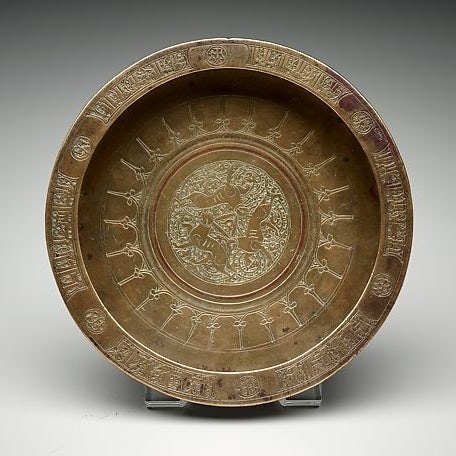
The word “meme” was coined by author and evolutionary biologist Richard Dawkins, who defined it as “an idea, behavior or style that spreads from person to person within a culture.” Memes have been around forever. Thousands of years before the internet, memes showed up in art, graffiti and even architecture.
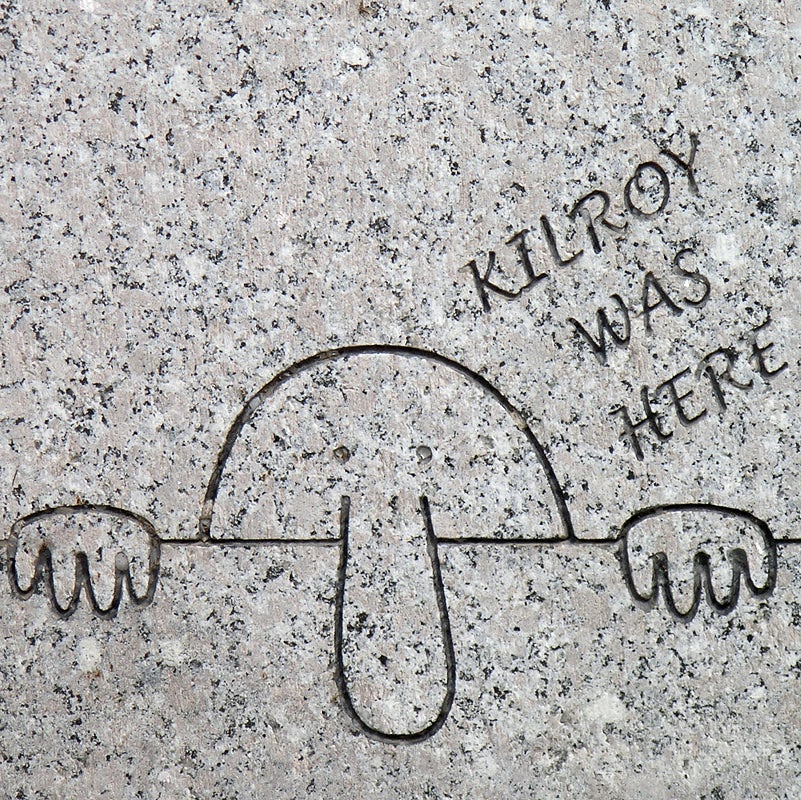
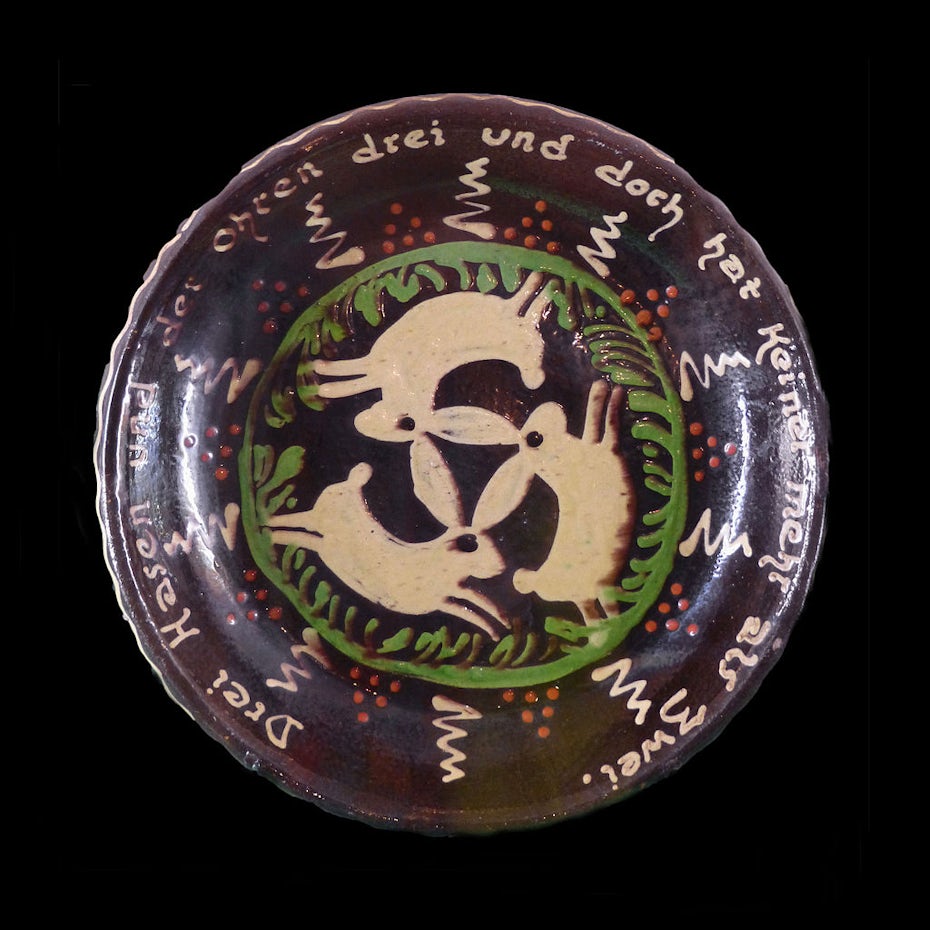
Engraving of Kilroy was hereGerman plate showing a three hares patternCopper tray showing the three hares symbol

Like any other piece of pop culture, memes have life cycles. A meme originates somewhere on the internet and if it strikes a chord with people, they share it over and over again, adding something new each time, until it reaches its saturation point. Remember how Baby Yoda dominated your feeds last December? That was Baby Yoda’s saturation point. And when you see less and less of a meme, it’s on the decline.


“Distracted boyfriend” meme with lyrics from Dolly Parton’s “Jolene”
Memes are an easy way to laugh about inside jokes with your followers. Via Know your Meme.
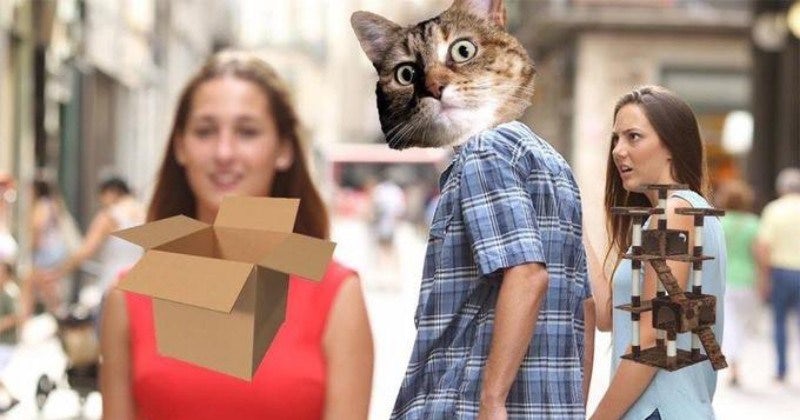
Distracted boyfriend meme about looking at the solar eclipseDistracted boyfriend meme with a cat looking at a box

Most memes die eventually, but some, like the distracted boyfriend, have wormed their way into our lasting lexicon.

How to use memes in marketing

You can use memes almost anywhere. Email templates. Social media banners. Postcards. T-shirts. Flyers. Ads. Greeting cards. Presentations. Swag. And if you’re brave, you can even include memes in your logo. No matter where you use them, memes are an easy way to make your designs and marketing more fun.
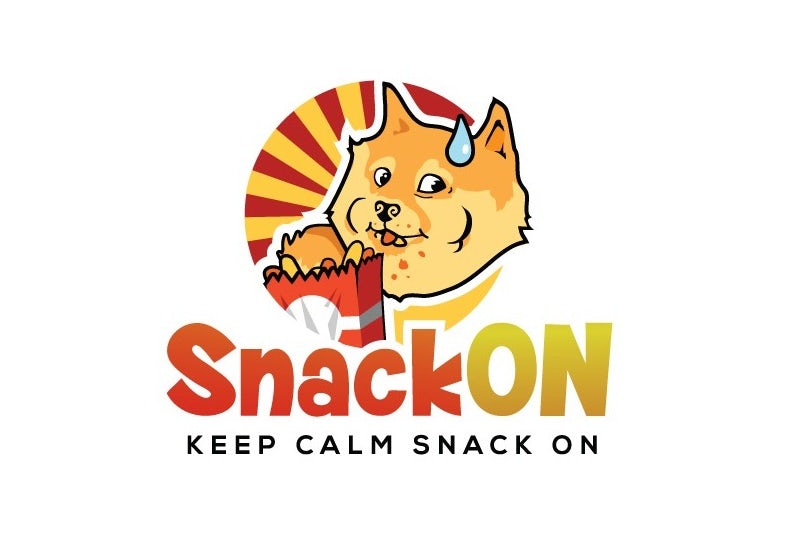
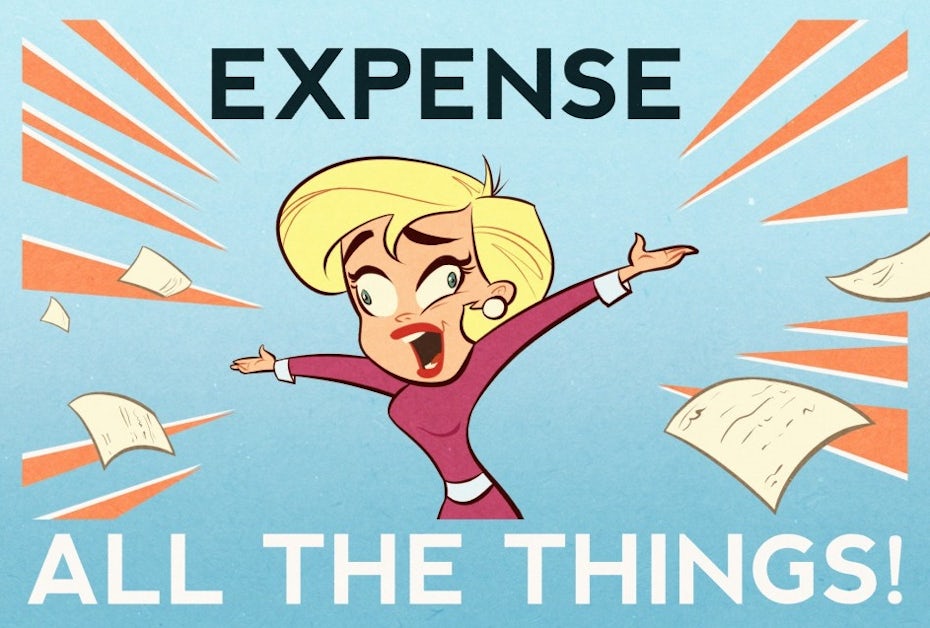
Round logo of a cartoon shiba inu eating snacksIllustration of an overexcited woman looking in two directions at once and flinging papers outward

But using memes in marketing can be a risky move because you’re not just using them to engage with your audience, you’re using them to drive sales. When memes are part of your marketing strategy, you’re claiming them as an integral part of your brand in a way you don’t when you’re just sharing memes for fun.

1. Find memes that work for your brand (and know what they mean!)

So hot right now” meme
Often, memes are used to comment on current events. Via Pinterest.

Memes are a language. They’re shorthand. Before you can use memes in your design and marketing efforts, determine which memes mesh with your brand by knowing your target audience. Some brands, like video game companies and geeky apparel retailers, have huge meme vocabularies because their audiences see memes every day. Others have more limited meme vocabularies because of their audiences’ limited exposure to memes and their less playful brand personas.

So how can you find memes that are on the rise? Google Trends. Just type in the name of a meme and you can see data on how often people searched for it, going back to 2004.
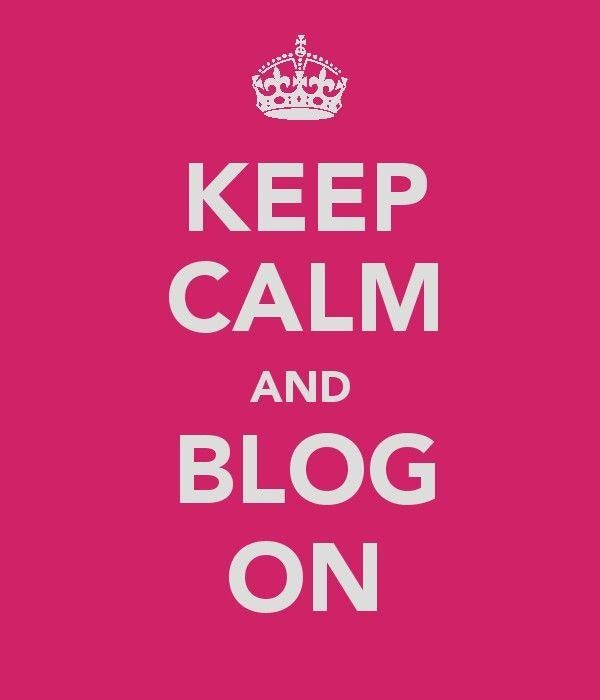
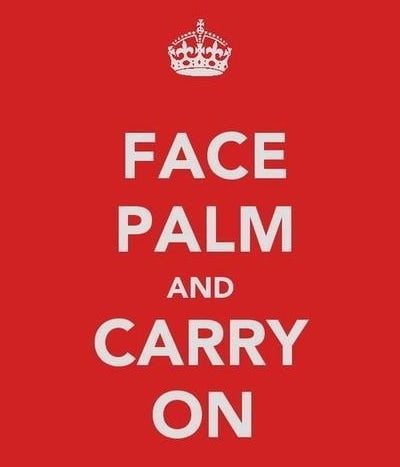
Keep calm and blog onFace palm and carry onKeep calm and consolidate your debts into one easy monthly payment

For example, the “Keep calm and _____” meme template only works when the second half of the phrase, the variable part, is a legitimate situation where keeping calm is the best course of action, but not always an automatic response. “Keep calm and pay your invoice” doesn’t work, because people are typically already calm when they’re paying invoices. But “Keep calm and consolidate your debts into one easy monthly payment” does because typically that’s hard to keep calm about. But a savvy debt consolidator can ease your mind by promising you a solution, and that promise might start with a meme on a website or business card.

Using a meme incorrectly makes you look tone-deaf. If you’re not 100 percent sure of what a specific meme means, look at variations of it until you completely get it. An easy way to do this is to visit Know your Meme, search for the meme you want to examine, then click through that meme’s gallery to see hundreds of different ways it’s been used.

2. Use memes in the right place

The next step in making your brand a meme machine is knowing the best spots to use them. Social media is an obvious choice, but other effective spots for memes are your website graphics and even within blog posts.

Think about what you’re saying with the memes you use. Once you’ve answered that, the right places for them are obvious. Let’s say you’re a grocery store looking to use memes to connect with younger shoppers and differentiate your marketing from competing chains. You might use “starterpack” memes in your circulars to showcase certain items you stock and why buyers might buy them together.

Starter pack meme showing multiple foods
A starterpack for the mature grocery shopper. Via Reddit, credit to Encyclopedia_Ham.
Starterpack showing items needed for a sick day at homeStarterpack for an office partyStarterpack of no-cooking-necessary foods

Knowing where to use memes also means knowing your audience. Will they chuckle at a meme you share but scratch their heads at a website design that has each button morphing into a different Advice Animal when you mouse over it? The more meme-savvy your audience is, the more ambitious you can get with memes in your design.
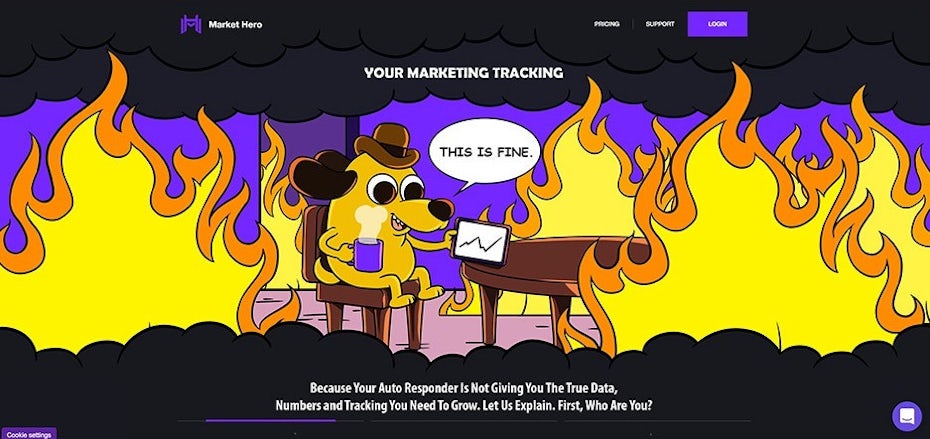
“This is fine” dog design on a landing page
No data? That’s fine…right? Illustration by rezahales.

In the design for Market Hero above, the meme works because the ideal audience is internet marketers who spend a lot of time online and consume a lot of memes. Just as critically, the meme hits right at one of the prospective clients’ pain points: auto-responders that don’t provide accurate data on their performance.

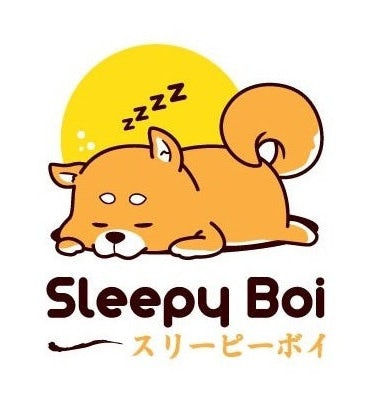
Simba and Mufasa meme posted by Denny’sIllustration of a sleeping shiba inu

Like we said earlier, memes are a language. Sometimes, the meme isn’t the image, but the vocabulary. Among dog owners, words like “doggo,” “pupper” and “good boi” have become verbal memes. If your target audience speaks this language, speak it with them.

Denny’s is a great example of a brand using memes to connect with their audience. In 2013, the company embraced Tumblr as a marketing channel and built a reputation for posting smart, slightly snarky memes.

3. Timing is everything

Memes come and go super fast. One of the perils of working memes into your designs is that you’re choosing to work with a vocabulary that’s got a limited shelf life. Use a meme when it’s on the decline, and your brand looks like it’s behind the ball. Use a meme that’s dead, and you look totally out of touch.

Alternatively, going with a meme that’s already old-school can protect your brand from looking like you’re out of touch…if you’re willing to be self-aware with it. Maybe the “Ermahgerd, berks” girl sums up exactly who your brand is. If that’s the case, embracing its outdatedness in all its dorky glory can communicate that not only are you willing to get silly, you’re silly and you know it.

It might feel kind of weird to think about it this way, but retro memes are a thing. Nyan cat, Rickrolls, Kanye interrupting and “One does not simply…” are all memes that are long past their peaks. Which makes them perfect nostalgia fodder. Memes in design can be a total win if you’re playing with 2000s-inspired retro design. And there’s a huge backlog of old memes to choose from.
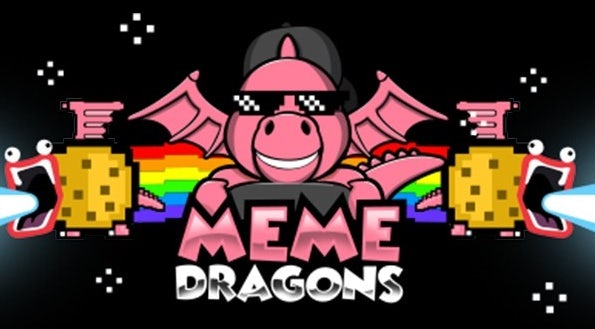
Logo showing a pink dragon wearing sunglasses and the words “meme dragons” flanked by shouting cookies
Twist memes and mix em up to create designs that hit home with your audience. Illustration by Yolman

But if you’re not going retro with your memes, pay very close attention to which memes are trending up and which are trending down. A meme logo can be a really fun April Fool’s gag and memes in short-form marketing materials like Facebook ads and limited offer landing pages are an easy way to work with short-lived trends.

4. Know that memes evolve
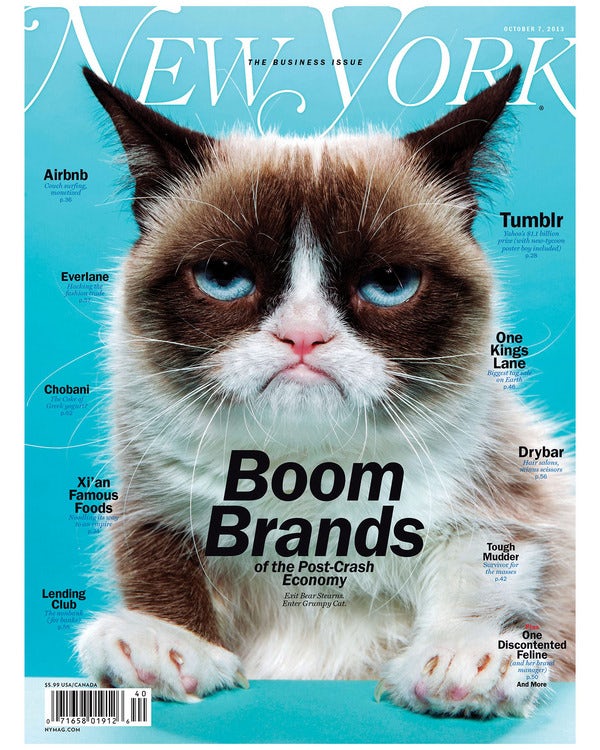
New York magazine cover featuring Grumpy Cat

Some memes are damaged goods (like Pepe the Frog) and others were icky from the get-go (like Ugandan Knuckles.) Using them will only hurt your brand. When you’re researching memes to potentially incorporate into your designs, research them thoroughly. If you choose one that’s an edgelord favorite (and your brand isn’t edgy) you run the risk of being offensive.

Remember, nobody owns a meme, not even its creator (as Matt Furie found out after Pepe was co-opted and used in ways he didn’t condone). No meme is safe from being paired with unsavory captions, adopted as a symbol of something objectively awful, or simply morphing into something that simply feels overdone or too silly to match your brand voice anymore.

Make a joke. Don’t be a joke.

Using memes in your marketing and brand design can be a way to communicate that you’re a savvy internet citizen. This is critical for any brand that works with tech in any way, whether you’re an IT company or an ecommerce retailer. But that doesn’t mean memes are the only way to communicate your internet citizenship status or that they’re the right choice for your brand.

Ultimately, memes are jokes. If your brand is fun and jokey, using memes in your designs can be a great way to get your audience to laugh with you. But if you’re not careful, they’ll be laughing at you. And that’s not a good look for anyone. The key to using memes in design effectively is self-awareness. If you’re a brand that can pull off memes in design, work with a designer who’s just as meme-savvy as you are to get design that’s an epic win.

Work with a talented design pro!
Our designers can create amazing meme-inspired designs that fit your brand.

The post How to use memes in your marketing appeared first on 99designs.

Friday, March 6, 2020

How this quirky UK brand is staking its claim in the travel industry

Everyday, our designers bring to life the brands (and dreams) of founders from all over the world. Anyone who’s started a business knows the rush of seeing their logo and branding—something that once was just an idea—in real life for the very first time. It’s a really special moment that we’re lucky enough to see on a daily basis.

Welcome to #99designed, where we’re sharing some of these amazing stories on our blog and Instagram.

The journey begins

Quirky Campers is a bespoke campervan rental agency offering beautifully designed, hand-crafted vans for rent in the UK and New Zealand. Founder Lindsay Berresford and her husband developed the idea after they rented out Bella, the custom campervan they had built, for six months while they were away in Kenya. The campervan stayed rented for over 120 nights, and its popularity inspired them to turn their idea into a brand-new business.

Saul campervanDuke campervanButtercup campervan

Craftsmanship is the name of the game at Quirky Campers. They make sure that every campervan they rent is a one-of-a-kind vehicle that will provide renters with the ambiance, comfort and fun that they deserve when they set out on the road. Owners often use many traditional skills and artistry techniques when they upgrade their campervans, including upholstery, metal work, and carpentry, to name just a few. The company also passionately supports upcycling, recycling, and reuse whenever possible. In fact, one of Quirky Campers’ vans is made from 90% reused materials, and a majority are built from reclaimed materials.

Beyond the vans themselves, the Quirky Campers team even scouts out the most well-designed and highest-quality campgrounds where their clients can have a memorable stay. The crew says their campervans are more like an Airbnb for lovers of outdoor living.

A quirky, crafted logo

Quirky Campers was already up and running when Lindsay realized she didn’t have a logo or business card. In fitting with her brand’s commitment to craftsmanship, she wanted a simple, beautiful design that had a handmade look without being too DIY. Through a logo and business card design contest on 99designs, Lindsay collaborated with Irish designer spoon lancer.

Quirky Campers business cardsQuirky Campers logo
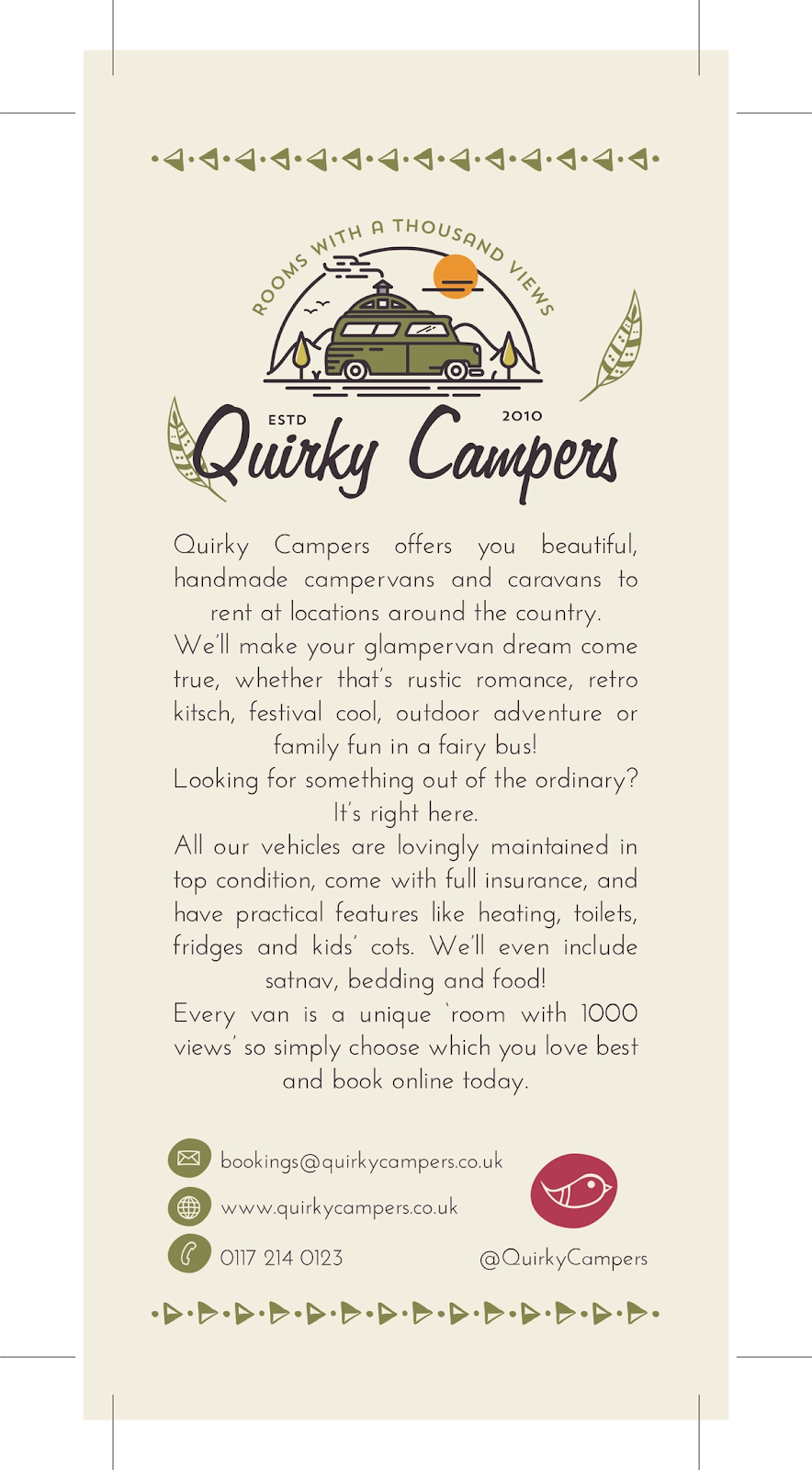
Quirky Campers flyer design
Quirky Campers flyer design by Lucadia

The Quirky Campers brand embodies an outdoor lifestyle with a sprinkling of beauty and uniqueness. Their audience is made of adaptable individuals and families who love travel, DIY and the relief of having less “stuff” in their lives.

The Quirky Campers team established these brand values before they started their design contest, but they were flexible in how these values manifested in their design. Spoon lancer looked to these brand elements to create a top-notch logo and brand identity that Quirky Campers now uses in all of its marketing and communication.

After nailing their logo and business cards, the Quirky Campers team went on to work with designer duo Lucadia on a two-sided flyer to help promote the company. Lucadia’s design merges the existing brand elements with playful iconography to create a playful, yet elevated flyer that perfectly introduces Quirky Campers to the world.

The new age of old-school travel

Boutique hotels, “voluntourism” and Airbnb rentals have become essential trends in the travel industry over the past few years. Alternative travel experiences and vacation accommodations are on top of travelers’ lists, and Quirky Campers is right in the middle of the movement. As the company responds to what more and more individuals want, their emphasis on quality and craftsmanship sets them apart from the rest. As Lindsay points out, their distinctly unique campervans has helped them to naturally draw press interest, backlinks from many other websites and lots of social shares, which allows them to continue standing out in their small but powerful industry.

By focusing on quality first and foremost and growth second we have maintained our uniqueness.

Lindsay and her husband believe that the industry is still extremely young. As it continues to grow, they’ll continue to invest in customs campervans and everything their customers are looking for when they travel. In addition to van rentals, Quirky Campers has now expanded to offer campervan sales, a directory of the best van converters, an online shop of #vanlife products, and the Camp Quirky festival for van-builders.

Camp Quirky
Camp Quirky image via Quirky Campers

In the meantime, Quirky Campers will focus on maintaining brand consistency as they slowly and carefully expand to other countries. And they’ll always stay true to their motto: Be true to your values, be consistent and have fun with it!

The post How this quirky UK brand is staking its claim in the travel industry appeared first on 99designs.
Thursday, March 5, 2020

The best logo animation software for every skill level

Logo animation software is rapidly becoming a staple in designer toolboxes everywhere. This year, logo animation will reach new heights in popularity and designers will be able to accomplish even more. In fact, animated logos have already had a profound effect on branding by enhancing memorability and working well in digital spaces.

Illustration of man using logo animation software
Illustration by OrangeCrush

But if you want your logo to bounce or dance or hop, you’ll need to find the best logo animation software for your needs.

To help you get started, we’ve evaluated the 7 best logo animation software apps for every skill level from beginner to advanced, along with their pros and cons, so you can pick the best one for you.

The best logo animation software

Renderforest

For a company that specializes in both branded videos and logo design, it’s no surprise that Renderforest offers one of the best and most loved logo animation software. With its template-style editing and 24/7 live support, it’s easy for first-timers to jump in while still offering enough complexity for more advanced designers.

Choose between a variety of pre-made effects/animations (like light trails or neon outline or even some 3D) and customize them to your particular style. Renderforest is great for beginners because their software makes it easy to do difficult techniques easily, like transform a basic 2D logo with a 3D effect, all with just the click of a button.

Features

  • Premade, customizable animations
  • Template-style design
  • Fast and simple interface
  • Easily turn 2D images into 3D animation
  • 24/7 live support

Pricing

  • Free, low-resolution watermarked videos, no watermarks starting at $9.99

OFFEO

OFFEO’s online logo animation software targets beginners with its template-style editor, which may limit experts who want more customization options. The actual animation capabilities are solid with over a thousand animated assets to choose from.


Amateur designers can mix and match pre-made graphics to create the logo they want, and although adept designers won’t be able to create much from scratch, they can still upload original content and fonts.


Features

  • 1,000+ graphic assets
  • Template-style design
  • Upload original content and fonts
  • Online-only — requires internet connection
  • Moderate learning curve
  • Usage sometimes lags

Pricing

  • $19/month or $14/month if paid annually

Animaker

Beginners will love Animaker’s drag-and-drop editor with self-explanatory controls and a helper named Max the dog who acts as an in-app encyclopedia when you need to know how to do certain functions. Animaker works well as a transitional design editor for people who want more than basic features, but aren’t advanced enough to build from scratch.

Animaker’s custom character creator is a nice touch, particularly if you want animated logos with a mascot. With prebuilt backgrounds like an office or beach, you can use the custom characters to create little animated scenes with branded “episodes.”

Features

  • Hundreds of premade assets
  • Template-style design
  • Plenty of customization options, including movement pathways
  • Square, vertical and widescreen videos
  • Create custom characters
  • User-friendly interface and controls
  • Generous onboarding process for beginners
  • Usable for longer videos, including story-oriented narratives, in addition to animated logos

Pricing

  • Free watermarked videos, No watermarks starting at $19/month

Adobe Spark

From the name you can trust, Adobe Spark is designed specifically for video introductions, but the capabilities are the same for short, animated logo videos.


Adobe has always had an intrinsic understanding of the business behind graphic design, so Spark offers themes tailored to specific needs, both in style and format. They even categorize templates by tags (from channel like “instagram,” to types like “events,” to content like “unicorn birthday”) and include a wide variety of visual styles and tones so you can easily find your perfect match.

Features

  • One of the largest and most beautiful font collections for any logo animation maker
  • Upload your own videos and images
  • Edit both square and widescreen videos
  • Easy-to-use, drag-and-drop editor
  • Options for recorded audio and/or music
  • Online editor or iOS app
  • Perfect for longer animations and motion graphics

Pricing

  • Free, low-resolution watermarked videos, No watermarks starting at $9.99/month

Tube Arsenal

Winner of the National Association of Broadcasters Best Service award for 2017, Tube Arsenal caters mostly to YouTube videos, but can be used for any short video or animated logo.

Tube Arsenal works very simply: Choose your prebuilt animation template, customize the text and colors, and export. While that can be frustratingly restrictive if you have an original idea, it’s perfect for creating something workable in under five minutes. However, if you plan on making a few different animated logos, Tube Arsenal’s pay-as-you-go model can get expensive.

Features

  • Choose from over 100 prebuilt animations
  • Both 2D and 3D capabilities
  • Great for beginners
  • Lots of templates specifically for YouTube
  • Very limited customization: Choose text, colors and music

Pricing

  • HD videos starting at $9

Biteable

Biteable has a library of top-notch, professionally animated videos available for you to customize.

With a slideshow-style editor, you can customize each “scene” as you like and stack them together for videos of any size. Customization is limited to choosing colors, text and uploads, but you can implement your originals directly into some of the templates to appear more natural.

Features

  • Top-quality animations templates, from cartoony to formal
  • Customizable text and colors
  • Upload images, logos or videos
  • Great for beginners
  • Perfect for longer animations

Pricing

  • $19/month ($15/month billed annually): 1 video export per month
  • $49/month ($29/month billed annually): 3 video exports per month, customizable watermarks
  • $99/month ($49/month billed annually): Unlimited video exports per month, customizable watermarks

Introbrand

Like Renderforest and Tube Arsenal, Introbrand lets you choose a short, pre-made animation and customize it with text, colors and your logo. Their app specialized in animated logos, which you’ll see in their template options.

Another perk of Introbrand is its simplicity. You can have a ready-to-go animated logo in just minutes. But be aware that the customization is pretty bare-bones. If you don’t like any of the pre-existing animations, you’re out of luck.

Features

  • Template-style editor
  • Quick and easy interface offer finished animated logo in minutes
  • Limited customization—text, colors and an uploadable static logo
  • 15 top-quality, premade animations to choose from, all specific to animated logos
  • 21 audio tracks to choose from

Pricing:

  • Free, low-resolution watermarked videos, No watermarks starting at $29.99

Energize your brand with the best logo animation software!

These 7 options for logo animation software is ideal for getting a finished product quickly and cheaply, but even the best of them have limited customization. You always run the risk of having an animated logo that looks just like another business that uses the same software. To get a truly one-of-a-kind custom animated logo, hire a freelancer designer who can dream up something specific and unique for you and your brand.

Get a custom animated logo!
Our designers are ready to bring your brand to life.

The post The best logo animation software for every skill level appeared first on 99designs.
Tuesday, March 3, 2020

How to build brand loyalty

Building brand loyalty isn’t easy, but it’s totally worth it in the long run.

brand loyalty illustration
What real brand loyalty looks like. Illustration by Vladanland.

When you’re building a brand, getting customers is essential, but it’s really just the first piece of the puzzle. If you want your business to thrive, it’s not enough to just get customers—you need to keep those customers coming back for more.

Brand loyalty is a huge part of building a brand that’s sustainable in the long-term. But what is brand loyalty? Why is it so important? And how can you build brand loyalty and transform one-time customers into lifelong brand enthusiasts? Keep reading to find out.

What is brand loyalty?

Brand loyalty is the tendency for a customer to buy from a specific brand instead of going to other options on the market. It’s a sense of trust and loyalty to a particular brand that can make a huge difference in the success of your business.

Why is brand loyalty so important?

It is, of course, important to focus on introducing new customers to your brand. But if those customers make a one-time purchase and then drop off the face of the earth (or the internet), they’re not going to have a huge impact on your bottom line.

brand loyalty illustration showing purchase interaction
Icon design by DreamMaster

But if you focus on building brand loyalty, those customers will continue to come back, engaging with your brand and driving profits for years to come. Plus, they will probably recommend you to their friends, which is crucial.

Bottom line: brand loyalty is a game changer for your business. Now, let’s dive into how to create that sense of customer loyalty for your brand.

How to build brand loyalty in 5 steps:

1. Make quality non-negotiable

The truth is, it doesn’t matter if you have a buzzworthy product or service. The market is full of companies with products or services just as buzzworthy as yours. If you want to break through the clutter, make sure that buzz lasts and your customers stay loyal to you in the long-term, you need to live up to your promises. Exceed their expectations and keep showing them that you’re a brand worth doing business with. Making quality a non-negotiable is a good way to do it.

building brand loyalty example: quality logo design
Delivering quality needs to be non-negotiable. Logo by martinem design

New brands launch every day, so putting quality at the top of your priority list is a way to not only add value to your customers, but to stay relevant in an increasingly saturated marketplace.

If you can establish yourself as a company that maintains quality across the board—whether you’re talking about product quality, the quality of your customer communications, or the quality of your ecommerce technology—you can break through the clutter of competitors who don’t provide that kind of quality and consistency and inspire the kind of brand loyalty that will keep your customers coming back for years to come.

For example, investing in quality control testing for your products might cost some extra time and budget on the back end—but when your customers realize your products are built to last, they’ll be inspired to keep shopping.

You might have to spend longer training your support staff on how to deal with customer issues, but when your customers are blown away by the ease of your support process, they’re going to keep coming back and buying your products.

The point is, quality can mean the difference between a flash-in-the-pan brand and the kind of brand that inspires customer loyalty for a lifetime. Make sure you’re the latter.

2. Develop a strong why

Ideally, people want to do business with brands they can stand behind—and the reason customers will be willing to stand behind you and your brand boils down to your why.

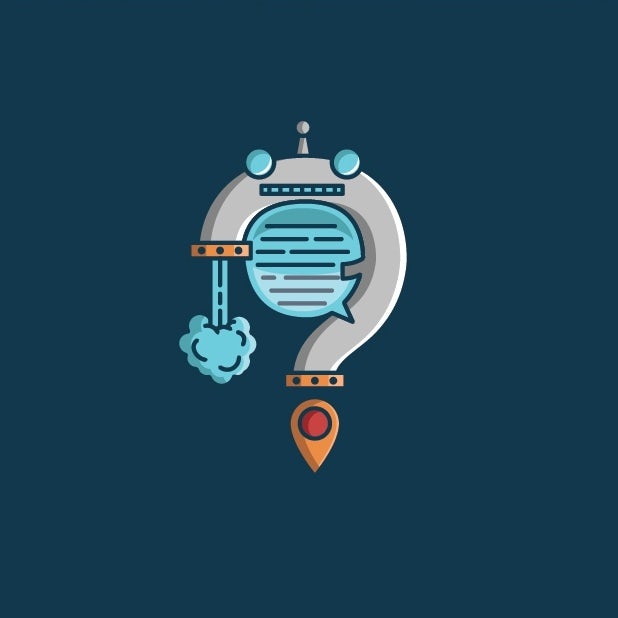
build brand loyalt by developing a strong why: question mark logo design
Develop a strong “why”. Question mark shaped logo design by Ocelittle.

Having a strong why is a must to break apart from the competition and forge an authentic connection with your ideal customers—and develop the kind of brand loyalty that makes them customers for life.

Put some real time and effort into defining your brand mission values. Start with key questions: why are you in business? What do you stand for? What is your authentic identity as a brand—and how do you want that brand identity to come across in the marketplace?

When your customers see your authenticity, it helps to deepen the trust between consumer and company. And when your mission and values align with theirs in an authentic way, it can inspire the kind of loyalty that turns one-time customers into lifelong brand evangelists.

So, in a nutshell, what you do as a brand is important—but when you’re talking about creating brand loyalty, why you do it is even more important.

3. Make your branding consistent

Brand loyalty starts with trust. If your customers aren’t having a consistent experience of your brand, that trust isn’t going to develop—and neither is brand loyalty.

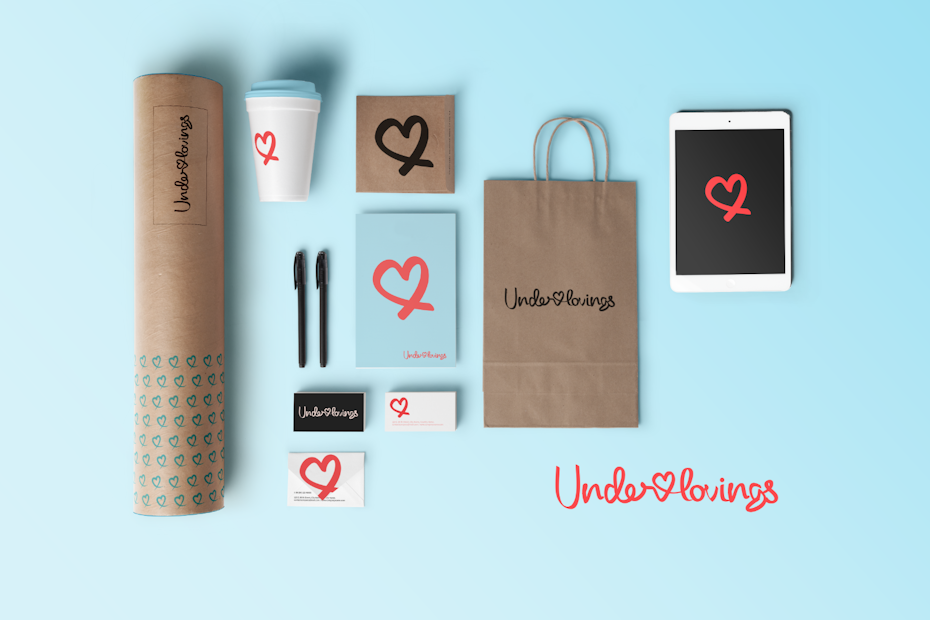
simple heart logo design consistently presented on different materials
An attractive and consistent brand design by nnorth

Your customers should have a consistent experience wherever they encounter your brand, whether they’re looking at your website, scrolling through your social media feed or interacting with your team at a live event. Basically, consistency is a way to build trust—and trust is the key to brand loyalty.

Or, in other words: consistency = trust = brand loyalty

Take the time to develop your brand identity, define who you are as a brand, and how you want to communicate that brand to your customers—and make sure you replicate that experience across every platform where they might interact with your brand.

So, for example, if you decide you want to go with an edgy brand voice, that edginess should be apparent in your web copy, your email and your social media posts. If you decide you want to go with a softer brand color palette, you should keep that palette consistent across print, web and other branding elements.

The more consistent and authentic you are as a brand, the more your customers will trust you—and the more loyalty you’ll foster as a result.

4. Create an unparalleled customer service experience

Your customers initially made a purchase with your brand because of the products or services you offer. But while having a great product or service will lure them in, it’s not enough to keep them there.

customer support ninja logo mascot
Become a support ninja. Logo design by Vi.

Offering stellar customer service is one of the biggest value adds you can deliver for your customers.

When your customers trust that the process of doing business with you will be easy, convenient and straightforward—whether that’s buying a product from your website, making a return or interacting with your customer service team—they’re going to be more likely to continue doing business with you in the future.

The good news? So many companies fail to focus on customer service that standing out and making a real impact on your customers doesn’t take much. If you want to create an unforgettable customer service experience for your customers (and drive brand loyalty in the process), here are a few tips to help you get started:

  • Offer hassle-free returns. No matter how great your products or services are, there are going to be customers that need to make a return—and if that process is a nightmare, they’re never going to buy from you again. Offer a hassle-free return policy and make the return process as easy and straightforward as possible. When your customers realize that they don’t have to jump through 10,000 hoops to make a return, they’ll be much more comfortable making future and repeat purchases.
  • Make it easy to find the information they need. If you have an issue or question that comes up often, beat your customers to the punch and make it easy to find the information they need—without needing to reach out to your customer service team. Things like how-to guides, reference articles and tutorials are a great way to add value and make for an easier, more effective customer service experience.
  • Take the time to train your team. That said, you’re going to have customers who need a higher level of support—so make sure you take the time to train your CSRs to provide the highest level of service possible. Your reps should be friendly, know your products/services inside and out and be willing to go above and beyond to make sure your customers have everything they need to solve their issue.
  • Ask for feedback. The best way to figure out exactly how to give your customers the kind of service they want and need? Ask them! Getting feedback directly from your customers (and then implementing that feedback) shows your customers that you’re invested in them for the long-term—which will make them more likely, in turn, to do the same. Send out feedback requests to your customers to ask how you can improve. Add a comments section to your website where your customers can submit feedback, comments and questions. Reach out to customers directly to see what they want from your brand—and how you can deliver it. The more feedback you get from your customers, the better you can adjust your strategy to suit their needs—and the more loyal they’ll be to your brand.

5. Give your customers incentive to keep coming back

A lot of brands put a crazy amount of time and effort into converting their prospects into customers—and then completely drop the ball once those customers have made a purchase.

loyal dog logo
Loyal customers will come back time and time again. Logo design by hummingbird.

If you want to foster brand loyalty, you need to put as much time and effort into taking care of your existing customers as you do getting new customers in the doors.

Things like existing customer discounts, exclusive events and early access to sales or product launches are a great way to add value and show your customers you appreciate their business.

When your customers feel valued and taken care of, they’re also going to be more loyal. They are more likely to recommend you to their friends and continue doing business with you over the long-term.

Get out there and inspire the kind of loyalty your brand deserves

Creating brand loyalty with your customers is key to taking your business to the next level. Now that you know exactly how to create that sense of loyalty, all that’s left to do is get out there, connect with your customers and inspire the kind of loyalty your brand deserves.

Need help branding your business?
Let our designer community create the perfect look for your brand.

The post How to build brand loyalty appeared first on 99designs.
Monday, March 2, 2020

Cosmetics branding: how to build a brand in the cosmetics industry

Competition in the beauty industry is fierce. Cosmetics branding is the key to help you make your beauty brand stand out from the crowd—if you do it right.

In order to succeed, you need to break through the clutter, grab your ideal customer’s attention and show them why your product is the one they need.

The best way to do that? Branding.

cosmetics branding illustration
Illustration by OrangeCrush

Branding your cosmetics business and developing a solid cosmetics branding strategy is a must if you want to succeed in today’s uber-competitive beauty market.

But how, exactly, do you do that? Let’s take a look at all things cosmetics branding—and how you can brand your company and products in a way that leaves a mark on the industry—and your target customers:

The basics of cosmetics branding

First things first, before we dive into how to brand your cosmetics company, let’s first cover the basics of branding.

When it comes to branding your business, there are three basic concepts you need to understand. They’re known as the “three B’s”—brand, branding and brand identity.

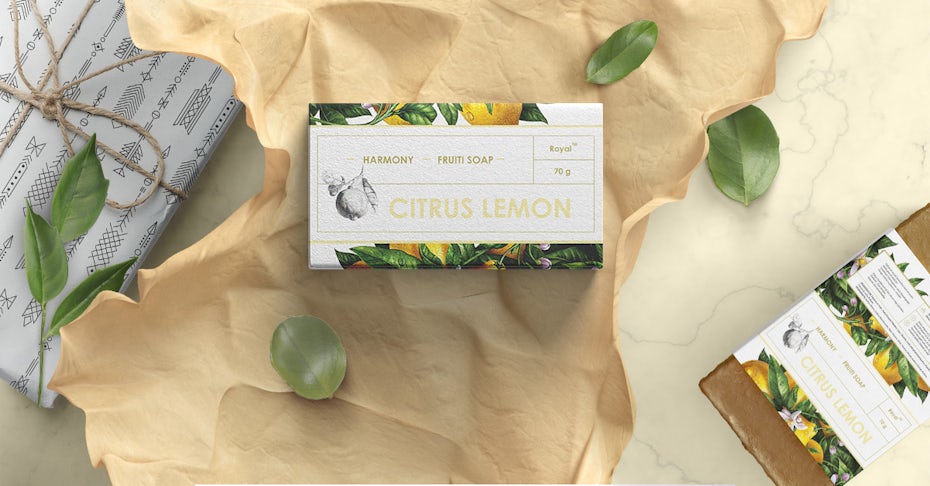
soap packaging with realistic drawings of lemons and leaves
Packaging design by CyanTriangle_com

The differences between the three B’s are subtle, but important:

  • Your brand is the perception of your company out there in the world.
  • Your branding is the act of shaping your unique, distinctive brand; think of it as the active practice of bringing a brand to life.
  • Your brand identity is all the key elements that your company creates to portray the right image to its consumer—like your brand voice and brand design including your logo, your website, or your cosmetics packaging—to communicate your message to your audience.

All three b’s are a must if you want to build a successful, marketable beauty brand. Without active branding, you won’t have control over your brand. Without a brand identity, you can’t move forward with your branding. Each of the three B’s builds off the other—and all three are must have’s if you want your cosmetics brand to thrive.

4 questions to answer before you start branding

Now that you know the basics, you might be tempted to jump right into the cosmetics branding process. Which makes sense; you’re excited about your business and your products and can’t wait to get them out into the market.

But if you want your brand to really stand out and effectively reach your ideal beauty customer, there are some key questions you need to answer before you start building your brand.

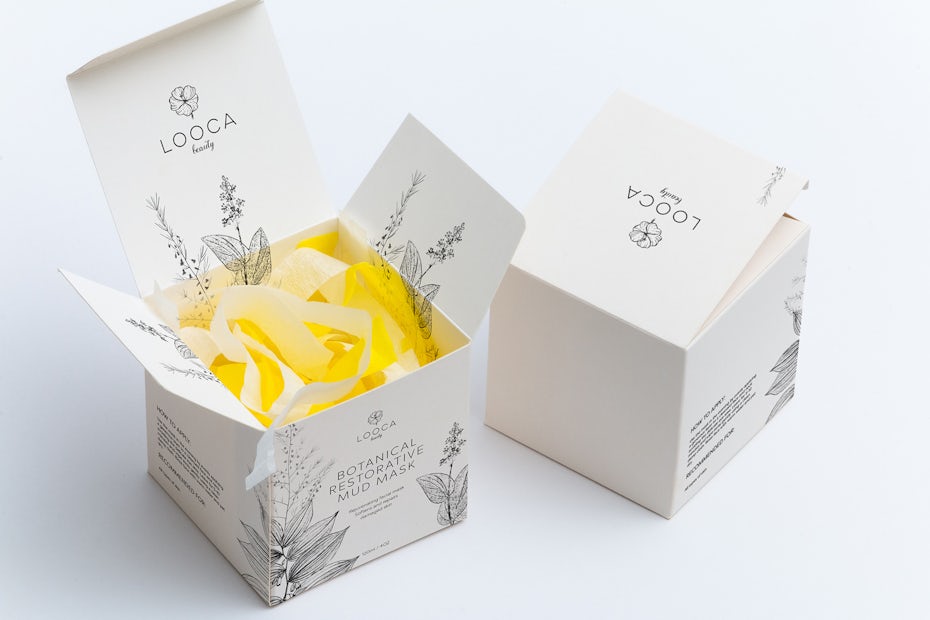
white packaging with intricate floral drawings
Packaging design by Anny.Kanev

Who are you?

Before you can expect customers to connect with your company and products, you first need to understand who you are as a brand.

If you could describe your brand in three words, what would they be? Maybe you’re dark, edgy and innovative. Maybe you’re feminine, fun and bright. Or maybe you’re all-natural, environmentally-friendly and subtle.

Whatever kind of cosmetics company you’re trying to build, boiling your brand down to a few adjectives can help simplify the process, streamline your branding and guide your branding decisions.

What are your competitors doing—and what are you doing differently?

As mentioned, there is a lot of competition in the cosmetics world. If you want your brand to succeed, you need to know what makes your brand stand out.

Look at your competitors. What are they doing to make their mark in the industry—and how are you different? Knowing what makes you unique and different from what’s already out there is your point of difference or POD. It’s what’s going to make your ideal customer choose your products over your competitors.

What are your mission and values?

Floral Chemistry Logo
Logo by thisisremedy for Floral Chemistry.

Customers want to work with brands they can stand behind. So if you really want to connect with your customers, you need to do more than make amazing lipsticks or super pigmented shadows—you need a strong corporate mission and values.

First, there’s your mission statement. Think of the mission statement as the “why” behind your business. For example, maybe you’re determined to raise the standard for eco-conscious manufacturing and packaging in the cosmetics industry with your line of all-natural products.

If you’re not sure what your corporate mission is, try filling in the blanks of this statement: “Our company exists to ______. In five years, we will be _____.”

Next is your corporate values. Your values will not only drive your internal strategy, they will also help you connect externally with your customers. What do you stand for as a brand? Using the all-natural product example, your corporate values could be sustainability and safety.

Your corporate mission and values tell you, your team and your customers what you stand for and what you aim to accomplish as a brand. Together they can go a long way in helping you carve out your niche in the cosmetics industry.

Who is your ideal customer?

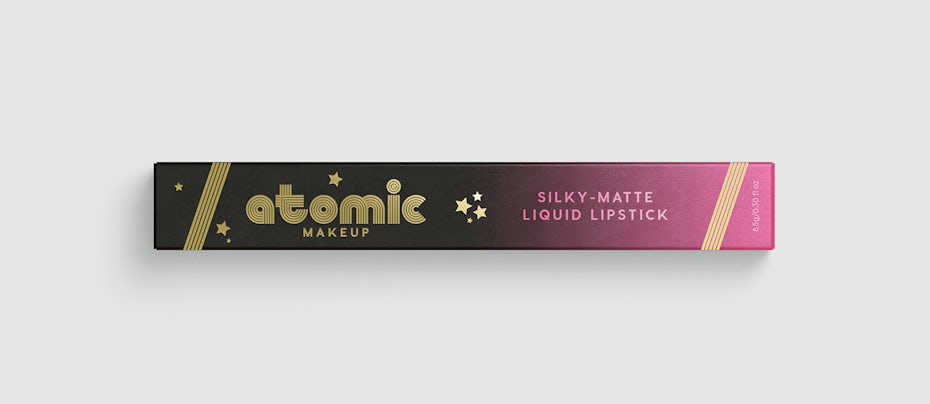
lipstick packaging with retro inspired typography and stars
A youthful yet cool packaging design by Luko

When you build and launch a cosmetics brand, you want to make sure it speaks to your ideal customers, but you can’t do that if you have no idea who those customers actually are.

Before you start the branding process, take the time to create an ideal customer avatar. Who are you targeting with your products? What are they looking for in a cosmetics brand? What are their challenges?

Knowing who your customer is will help you make the right branding decisions and guide the branding process and will ultimately help you build a brand that speaks to and connects with your ideal customer.

Building your brand identity and designing your must-have branding elements

Once you’ve answered the core questions about your brand the next step of the branding process is building your brand identity. The first part of that process is to define your design building blocks.

There are a few key design elements and principles that you need to define to drive your branding process, including:

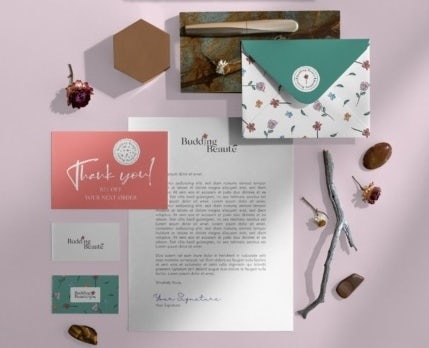
feminine, playful cosmetics branding
Beautifully playful cosmetics branding by svart ink
  • Typography. The fonts you use in your brand elements can send a strong message about your brand to your audience; for example, using an edgy graphic font on your eyeshadow palette packaging—think: Urban Decay—is going to send a very different message than a more feminine, script font used in brands like Too Faced.
  • Color palette. Color is an extremely powerful branding tool. People have strong associations with color and when you understand those associations, you can use color strategically to inspire specific thoughts, emotions and reactions in your audience. For example, if you’re launching an all-natural line of products, you might want to incorporate green, which people associate with nature. If you’re launching a line of prestige products, you might work purple into your color palette, which is typically associated with luxury or royalty.
  • Form/shape. A sharp, angular logo is going to create a different look and feel to your brand, and send a different message, than something more rounded or organically shaped—so it’s important to choose forms and shape that reflect who you are as a brand.
  • Brand voice. Having a clear brand voice is important for any brand—but it’s especially important in the cosmetics industry, where social media plays such a big part of building a brand. Your brand voice is an integral part of your branding—and defining your voice from the get-go is a must to ensure a consistent brand experience for your audience.

Designing your key cosmetics brand elements

Once you’ve nailed the basics of your brand identity, it’s time to take things a step further and actually design your key cosmetics brand elements.

There are a few brand elements any cosmetics company will need to launch a successful business, including:

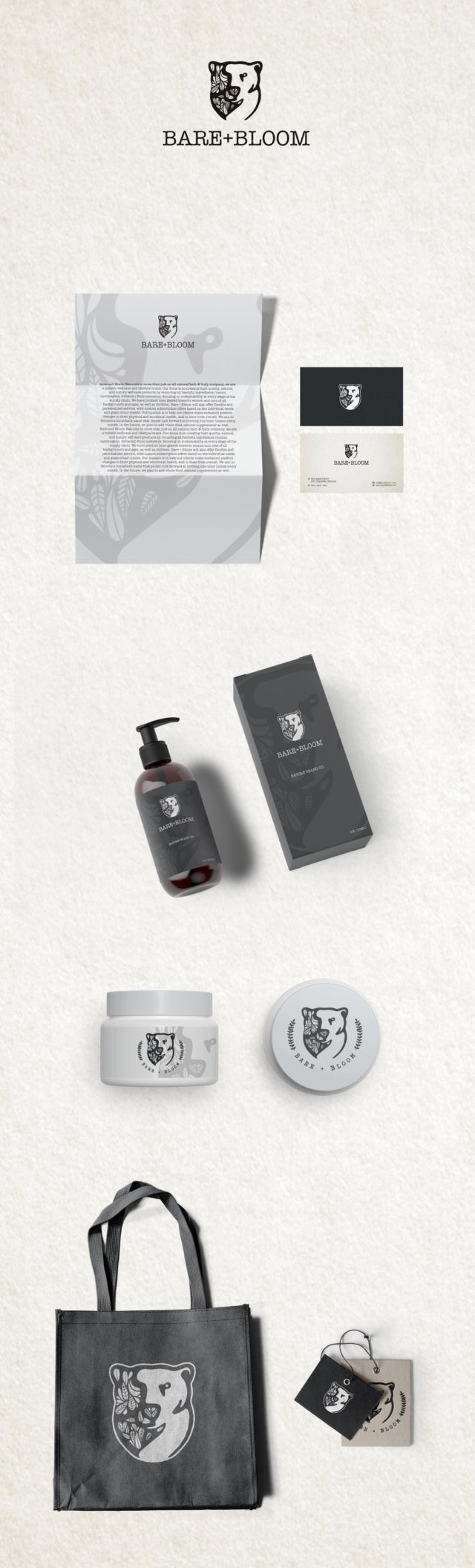
simple, cool, monochrome cosmetics branding
Different branded cosmetics brand design elements by Almi design
  • Logo. Your logo is the face of your beauty business and, as such, it’s the most important element you’ll bring to life during the branding process. Your logo is going to be one of the first experiences potential customers will have of your brand and because it’ll be featured prominently on everything from your product packaging to your website, it will definitely be the design that’s most closely associated with your brand.
  • Digital presence. A lot of your customers are going to interact with your brand online, so your digital presence—including your website, your emails, and your social media platforms—need to be an accurate reflection of your cosmetics branding.
  • Packaging. Creating on-brand packaging is important for any business selling a physical product, but it’s especially important in the cosmetics industry. Because competition is so fierce, both in stores and online, you need to create cosmetics packaging that’s not only functional, but feels unique, innovative, and on-brand—and jumps off the shelf and grabs your ideal customer’s attention.
  • Business cards. Part of succeeding in the beauty industry is forming partnerships with retailers, influencers and other brands. You’ll also need an on-brand business card complete with your logo, website and any other elements of your brand identity, to build those connections.
  • Merchandise & swag. Depending on your marketing strategy you might also want to think about branding additional items such as shopping bags, stickers, wrapping paper or t-shirts.

All of these elements are a key part of launching a successful cosmetics brand. Before you launch your cosmetics line, you need to have them all designed and ready to go, ensuring they’re all an accurate representation of who you are as a brand.

Branding yourself in the beauty-obsessed world of social media

In 2020, every brand needs a presence on social media, but it’s especially essential for beauty brands.

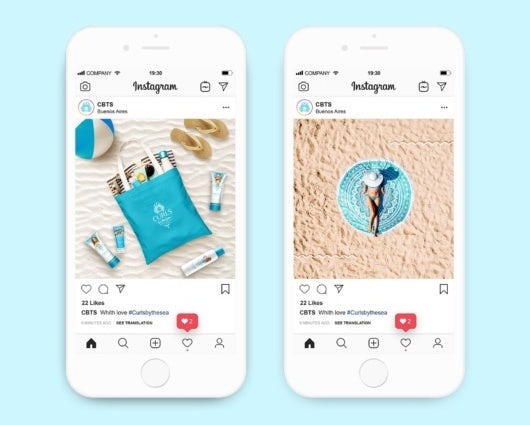
cosmetics branding for social media
Social media cosmetics branding by JayJackson

If you want your beauty brand to succeed, you need to brand yourself on social media. While all platforms are important, YouTube and Instagram are both visual platforms where the bulk of beauty content lives, making them, hands down, the most important channels for cosmetic brands.

Focus on developing on-brand content for YouTube and Instagram. This can include tutorials, unboxing new products and Q+A’s about how to use your products.

You should also have a plan for connecting with beauty influencers. Influencers typically have extremely engaged audiences. If you can get an influencer with a similar audience to endorse your brand, it can go a long way in getting your products into the hands of your ideal customers.

New to the world of influencer marketing? Here are a few things to keep in mind:

  • Make it personal. Influencers can get a lot of messages from brands. A stock message isn’t going to get their attention. If you want an influencer to work with you, make your message personal. Show them you know who they are and what they’re about—and then craft a personalized message that speaks to why your brand is the right fit for their channel and their audience.
  • Focus on micro-influencers. Getting a major beauty influencer to endorse your brand, especially when you’re first starting out, can be nearly impossible, or way too expensive. Luckily, you don’t need a huge name to have a successful influencer marketing push. Micro-influencers are influencers with smaller audiences, but those audiences are often extremely engaged, and as such, those partnerships can deliver a lot more bang for your buck. According to AdWeek, micro-influencers are 6.7X more effective per engagement than larger influencers.
  • Deliver the right product education. You want any influencer partnerships to push your brand forward—and a lot of that has to do with education. Make sure that when you partner with influencers, you spend time educating them about your products, including application techniques, key ingredients, and what makes each product unique.
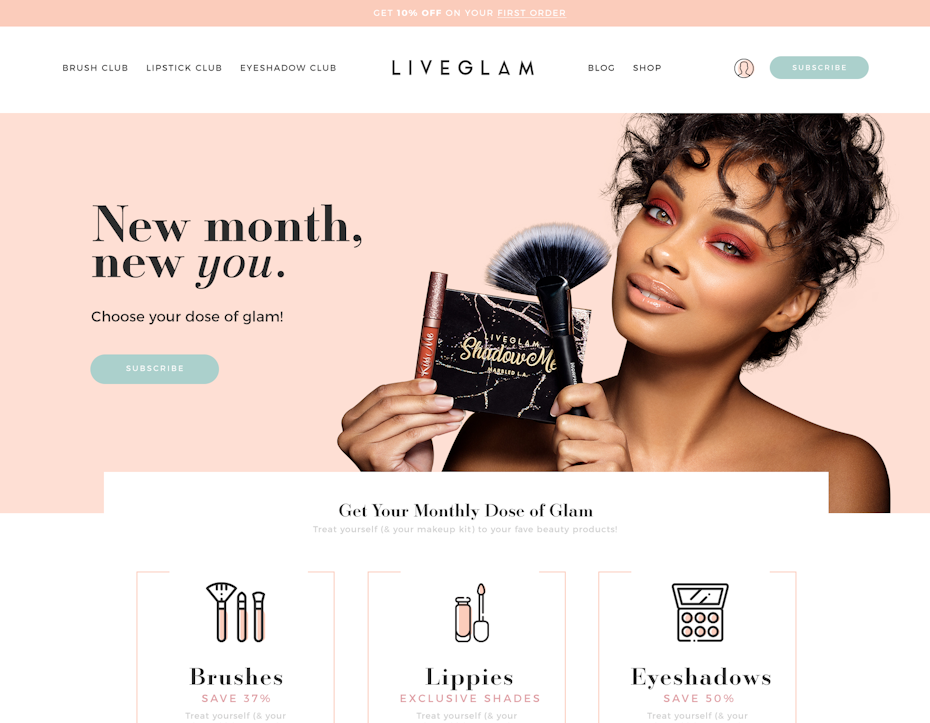
Beautiful modern cosmetics branding web design example
Cosmetics brand web design by Sandra Eftimie

Bringing it all together with a brand style guide

Cosmetics brands are all about style—and if you want your branding to feel consistent, you need to tie it all together with a brand style guide.

Your brand style guide is a centralized document that houses all the key information about your cosmetics branding, from your brand color palette to your different packaging designs to the do’s and don’ts of your social media brand voice.

You can make your brand style guide as detailed as you’d like (the more detail, the better!), but at the very minimum, you should plan to include:

Having a brand style guide is essential because not only is it super convenient to have all that key information in one place, but it’s also helps to maintain consistency for your cosmetics brand. A style guide helps to get everyone on your team on the same page, which ensures that whatever is produced for your brand, whether it’s an email reaching out to a key influencer or a packaging design for a new line of lipsticks, is in line with your big-picture cosmetics branding strategy.

The key to successful cosmetics branding? Consistency and flexibility

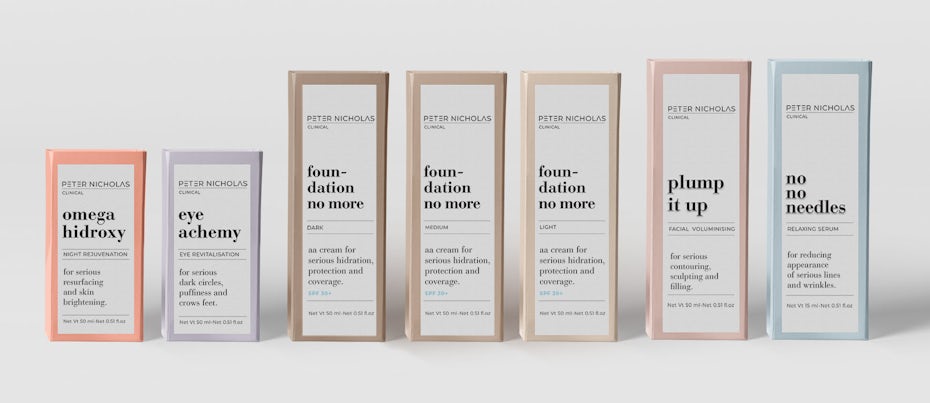
minimal beauty packaging in different pastel colors and serif fonts
Packaging design by my name is freedom

Congratulations! You now have all the essential elements to build a successful cosmetics brand. But there’s another element to branding that can’t be skipped—consistency.

If you want your cosmetics brand to succeed, your audience must have a consistent experience of your brand wherever and however they encounter it. Your brand needs to be consistent across your website, social media, influencer partnerships, packaging, product quality and logo. Every element that represents your brand should be aligned with a consistent brand strategy.

Your brand also needs to feel consistent across every platform, design and brand touchpoint. This helps to build trust with your audience—and that trust plays a huge role in transforming prospects into customers and customers into brand evangelists. This is even more important in today’s “cancel culture,” when one misstep, like the Jaclyn Hill lipstick debacle, can cause the beauty community to turn on a brand, leading to serious damage to that brand in the long-term.

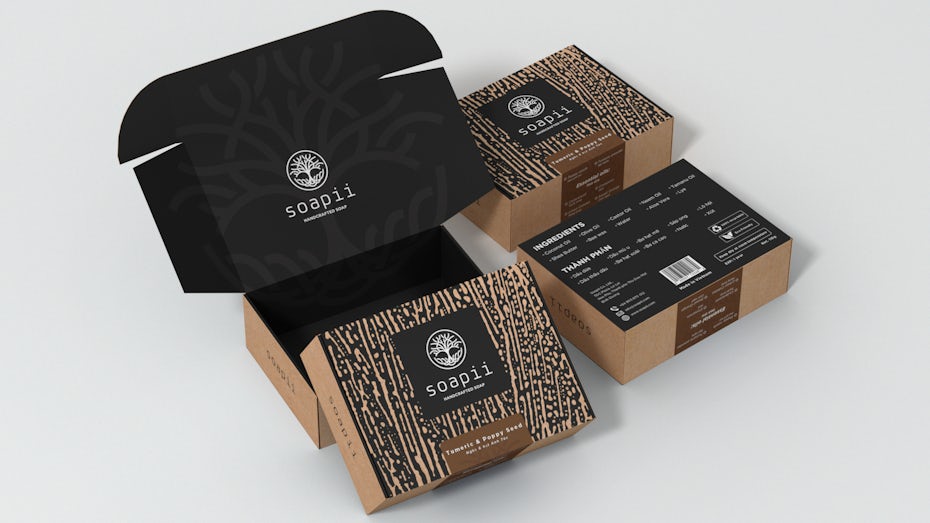
soap packaging with interesting stripe pattern
Packaging design by CUPEDIUM

Now, keep in mind, consistency is important, but so is flexibility. If the beauty industry evolves, if your customer changes or if something just isn’t working for your brand, you need to be flexible enough to pivot and adjust your cosmetics branding strategy accordingly.

Take your cosmetics branding to the next level

Building a cosmetics brand can be an exciting, creative and fulfilling process. Now that you know exactly how to develop your cosmetics branding strategy, there’s only one thing left to do—get out there and get branding!

Want the perfect brand design for your business?
Let our designer community create it for you.

The post Cosmetics branding: how to build a brand in the cosmetics industry appeared first on 99designs.