Monday, December 23, 2019

Globalization in design: the future of freelancing in the design industry

When you think about the lives of freelance designers, what comes to mind? Maybe it’s creative people traveling the world, setting up a laptop in exotic coffee shops, working with a backdrop of turquoise waters or magnificent mountains—all while paychecks reach their bank accounts seamlessly. But the impact of globalization on the design industry and the lives of freelancers is so much bigger than that.

This imaginary idea of the freelance design life is one of autonomy, mobility and confidence. But how far is this from reality? It’s not too far off, but it’s only part of a much larger picture, according to the recent 99designs report Design Without Borders: The Future of Freelancing

Globalization in design has a huge impact on the whole industry and creates unique challenges and opportunities for freelance designers.

After surveying over 10,000 freelancers, we discovered how design has truly become a global industry driven by an international talent pool of freelancers looking for career and creative freedom. We learned about designers’ day-to-day life; the financial, practical, technical aspects of doing work; and what needs to improve in the industry to make work better.

The industry is changing. Read the full report.
Get a glimpse of who’s freelancing, their challenges, and their predictions for the future.

In this article, we’ll explore what life is like for freelancers around the world right now. What’s the impact of globalization? What are the current benefits of freelancing? What are the challenges? And what does the future hold for the freelance design life?

The office is where the wi-fi is

Globalization has dramatically expanded access to international markets and clientele. Freelance designers work in countless industries with brands and businesses of all sizes—from solopreneurs and small businesses to creative agencies and large corporations. The ability to freelance virtually has greatly transformed where designers choose to work and live. In fact, 43% of freelance designers have lived and worked abroad. There is a reason that the phrase “digital nomad” so popular: people across various fields are rapidly embracing this lifestyle, especially freelance designers.
Millennials have had an undeniable influence on global work culture and have made self-employment the new normal. A majority of designers under 30 (52%) leave their agency jobs after two years, much earlier than previous generations. This shift has created many more viable opportunities, which has made freelancing less risky and more common.

The rise in freelancing coupled with the rise of internet technology has given designers the option to work without being attached to a physical workspace.  About 85% of freelance designers currently work with clients outside of their own time zone. It’s now possible to travel the world and take a client meeting next to taco stand with wi-fi.

The key word here is “possible.” Designers choose freelancing not because it’s easy or perfect but because it makes certain things possible. 

I’ve been traveling the world for the past year and that wouldn’t be possible without freelancing.
- Designer from the US

The most attractive part of freelancing is undoubtedly freedom and flexibility. And it’s paying off: over 75% freelance designers are satisfied with their current professional situation. For many, it’s paying off literally. Nearly one third of freelance designers are making more money than they would doing the same work somewhere else. Plus, more than one third of designers are able to take at least two vacations every year. 

It’s “9 to 5” somewhere…

Work-life balance is an important part of any job. But when it comes freelancing, you’re pretty much on your own. Finding clients, managing projects and delivering work—everything’s on you, so work-life balance to master with time and experience.

Freelancing is not an “on the beach with a drink and a laptop” style of work. I chose design, tried, hustled, cried, hustled and hustled… But life is still not so sexy.
- Designer from Uruguay

Freelancing gives designers the ability to self-manage the time they spend working. And this is not an easy task. There’s very little to suggest that freelance design work is anything less than full-time design work. In fact, our report revealed that freelancing often exceeds the hours required by traditional full-time work. An estimated 40% of designers reported that they freelance over 40 hours a week, while 17% freelance to supplement their existing full-time day job. 

By and large, freelancing is very much a main gig that requires full-time attention with the possibility of a flexible schedule. This can be particularly liberating for those who live in time zones away from lucrative clients, but  also designers who feel more productive in non-traditional hours, like night owls, parents and designers with other day jobs.

Despite the flexibility, many designers described separating work and life as one of their biggest challenges. Making your own schedule and working without the watchful eye of peers or management can lead to issues with procrastination and having to overwork before deadlines. 

Balance means having the freedom to step away from work to take care of yourself and your relationships.
- Designer from the Brazil

It can be hard to set hours and boundaries that keep your work from being on your mind every day and night. Waking up and going to an office divides your day in a way that sets healthy boundaries, which can serve as an example for freelance designers who choose to start and end freelance work at the same time every day. 

The freedom and challenges of being your own boss

Designers love being untethered to companies, agencies, schedules, lifestyles and expectations. In fact, just a sliver (5%) of them are freelancing out of necessity.  From finding clients to completing projects, freelancers control every step of the work process, which allows them to select what they would like to work on and the types of clients they want to work with. They can choose projects that diversify their portfolios or focus on becoming a specialist in their field. 

The freedom to work that freelancers have can be a great way to manage workload, but it also creates a number of challenges. Because work tends to be project-based (as opposed to a month-to-month paycheck), freelancers face the possibility of  too many projects and the risk of not finding viable projects at all. In fact, 37% of designers report that they have a hard time connecting with new clients.

Digital freelancing platforms like 99designs have created and expanded working opportunities by making the process of finding quality freelance work remarkably easier. More than 84% of freelance designers have an account on one or more freelance platform. Over half of designers (57%) reported that online platforms are their primary source for client acquisition, while referrals (24%) and social media (11%) are also vital channels. 

Because of the growth of creative platforms, brands now have direct access to more culturally competent experts to help them expand their creative repertoire and reach new global markets. The wide range of companies seeking specialized work from creatives has made upskilling more important than ever. A majority of designers are continuously learning throughout their careers, and nearly half of designers list “the opportunity to learn new skills” as one of the best things about freelancing. And what used to require substantial investments in both time and money is now much more feasible thanks to technology and online learning.

Even if you don’t have the resources to go to college, it doesn’t mean you can’t be a graphic designer. Nobody should make you feel less for not having the same opportunity as them.
- Designer

Dealing with clients individually also comes with the power to set your own rate. As designers gain more experience and work with more clients, this can lead to much more profitable results than being tied to one agency.  Nearly a third of designers (31%) say they make more money freelancing than if they worked somewhere else. 

However, as more and more designers join the freelance ranks, competition can lead to looser rules about how and when designers would like to get paid: 34% of designers reported that they don’t believe they’re being paid what they’re worth, 26% said they struggle to collect payment and 24% have trouble negotiating rates.

The future is design without borders

What does the future hold for the changing face of freelance design life? The majority of designers (78%) say they’re satisfied with their current professional situation, though many (65%) admit that things still need to get better.

While the driving force for freelancing is freedom, the industry is changing, and both clients and creatives are trying to find their place in it As technology continues to transform how we work, there’s now a multi-talented, creative workforce spread around the world that is committed to learning and adapting to any challenge it may face. With their digital savvy and global awareness, designers will be well-equipped to take charge of the future of freelancing. Their flexibility and creativity empowers them in an unpredictable industry that continues to evolve.

The industry is changing. Read the full report.
Get a glimpse of who’s freelancing, their challenges, and their predictions for the future.

The post Globalization in design: the future of freelancing in the design industry appeared first on 99designs.

Wednesday, December 18, 2019

9 creative app design trends for 2020

When you look at the up-and-coming app design trends 2020 below, you’ll notice a couple things. One, lots of apps look way more vibrant, more polished, more immersive, and really in every way just more than the apps we’ve seen in the past thanks for our phones’ evolving tech specs. But at the same exact time, plenty of app designers are looking back in time for inspiration and working retro flair like pixely fonts and throwback color palettes into their designs to connect with users’ sense of nostalgia.

app design trends 2020
Illustration by OrangeCrush

The app design trends for 2020 aren’t that way by accident. As apps continue to take on bigger, more important roles in our lives, their designs evolve to reflect and drive how we interact with them. Ready to see what’s coming to your phone next and find inspiration for your next app design? Here we’ve gathered up the 9 app trends projected to be 2020’s hottest.

Here are the 9 biggest app design trends 2020:

1. Illustrations front and center

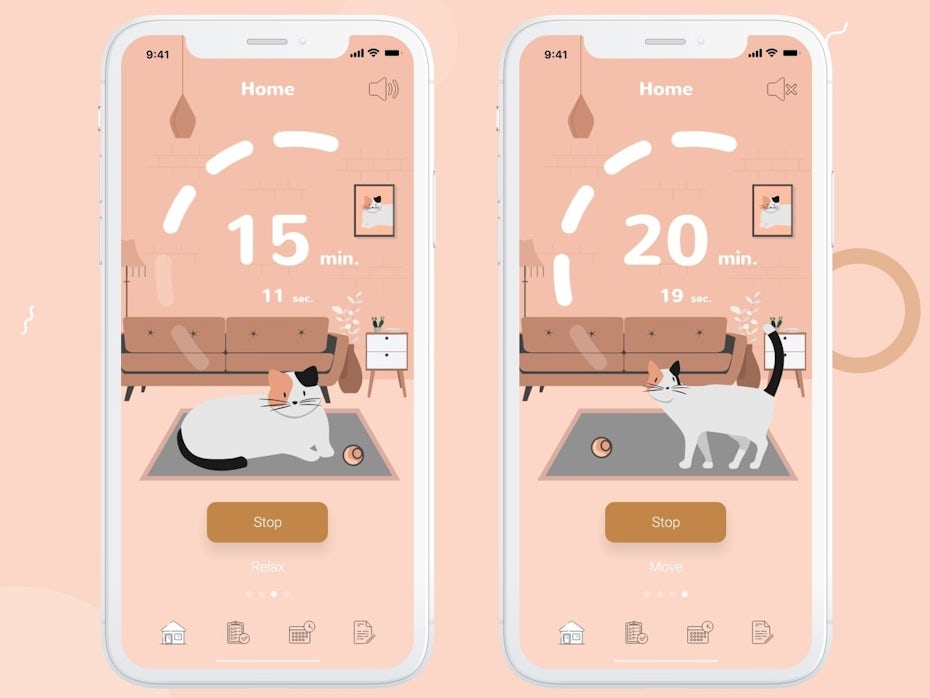
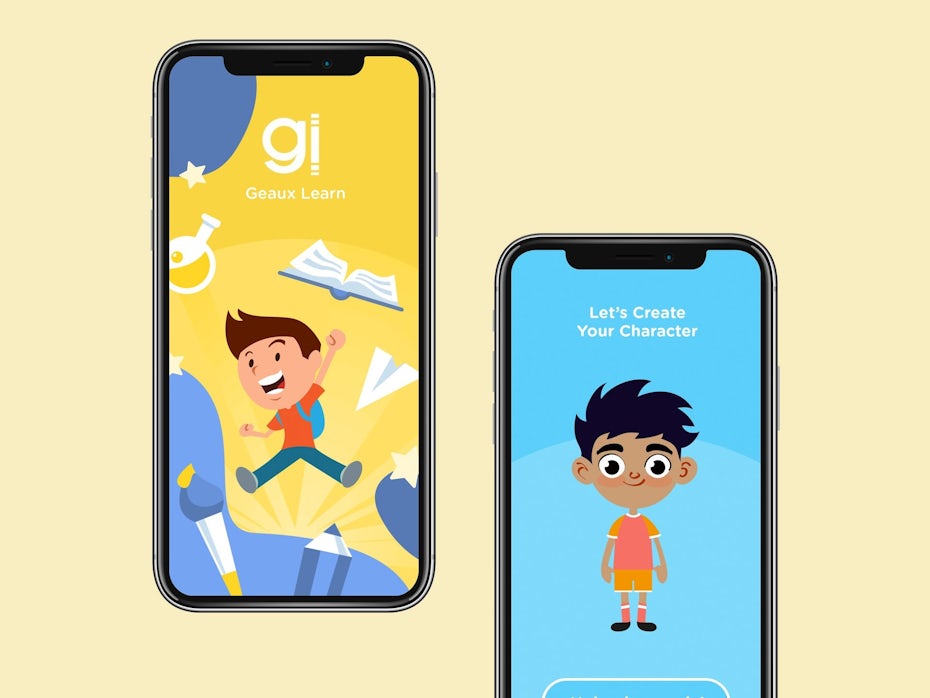
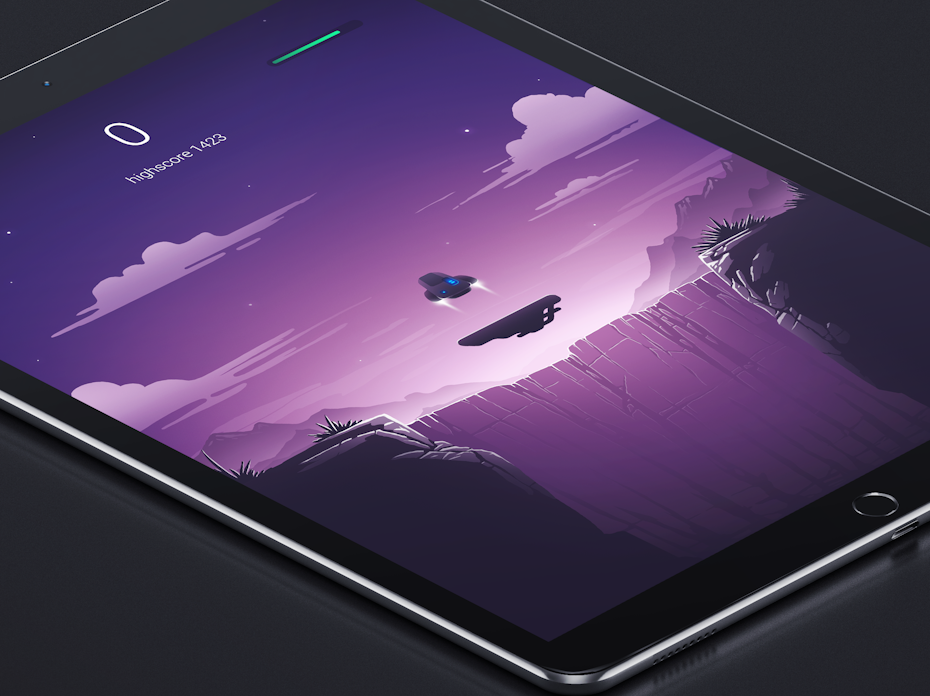
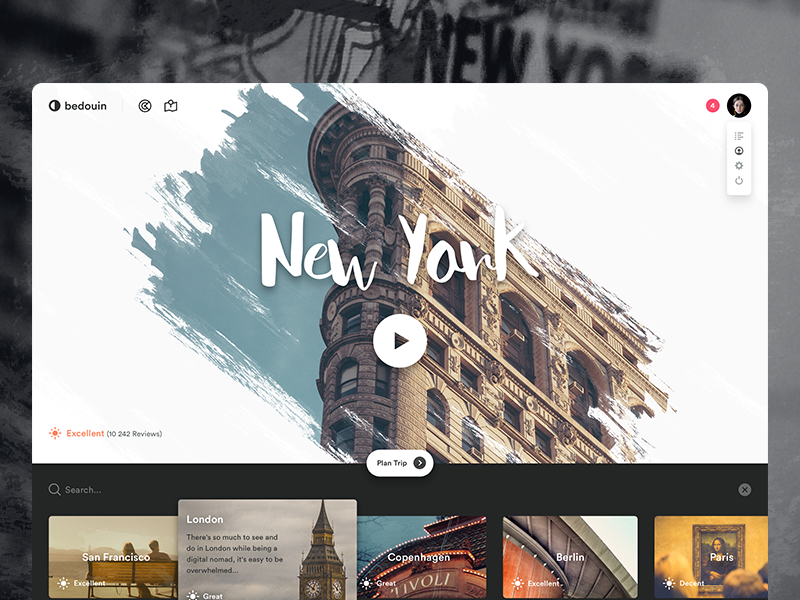
In 2020, illustrations in apps are gonna be big—literally. Not just graphics, but true illustrations that showcase the works of art that the apps are. In a lot of cases, we’re seeing flat and semi-flat illustrations in contrasting, eye-catching palettes like Outcrowd does in their design for Rent a boat. An illustration can feel more organic than a photograph or a graphic that feels, well, graphic-y. By giving users images that feel organic, apps designate themselves comfy, familiar environments.

animated boat rental app design with bright-colored images of kayaks
App design by Outcrowd. Via Dribbble.

Be honest – how many times have you opened an app or gone beyond an app’s landing page, been greeted with a wall of text, then said “nah, tl;dr” and navigated away? This app trend aims to catch users’ attention and hold onto it long enough to make sure they’ve got all the information they need, like Angelina Skiba’s weather app design that shows users exactly what’s happening outside so they know how to plan their outfits and their itineraries.

colorful weather app with semi-flat pictures of various weather conditionspastel-colored meditation app showing images of cats in indoor scenesmindfulness app with soft-colored images of women engaged in various mindful exercisesscreens from a kids app showing various characters and objectsprimarily purple screen showing a flying saucer hovering over a canyonapp showing an illustration of NYC building

2. Serif fonts

As long as apps have been a thing, they’ve been dominated by sans serif fonts. In 2020, that’s changing. Sans serif fonts aren’t going anywhere, but designers are demoting them to support roles and giving serif fonts top billing.

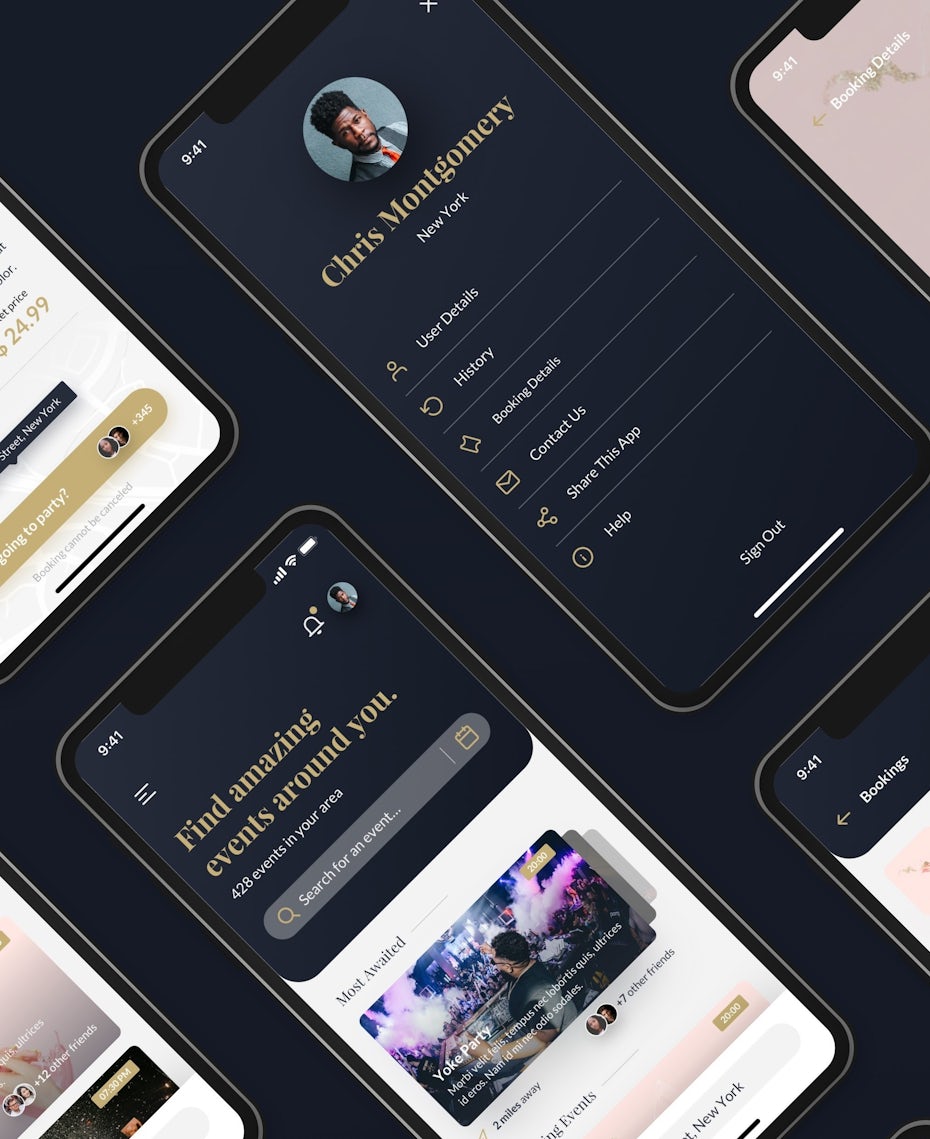
Using two kinds of fonts together creates a visual hierarchy, instantly separating headlines from supporting text like we see Martin Zagawa does in his concept design for a social app. In his design, serif fonts are for the structural, unchanging text in the app like the user’s name and their upcoming events feed. Sans serif fonts, in contrast, are for all the temporary and changeable information, like the names and dates of specific parties.

series of screenshots showing an events feed app
App design by designer Martin Zagawa

It’s clear that apps are way past the world of Whisper and Angry Birds. We use apps to manage our investments, broker business deals and discuss our deepest thoughts with our therapists. As apps take on a more serious role in our lives, serif fonts underscore this role and visually give them the gravity they deserve.

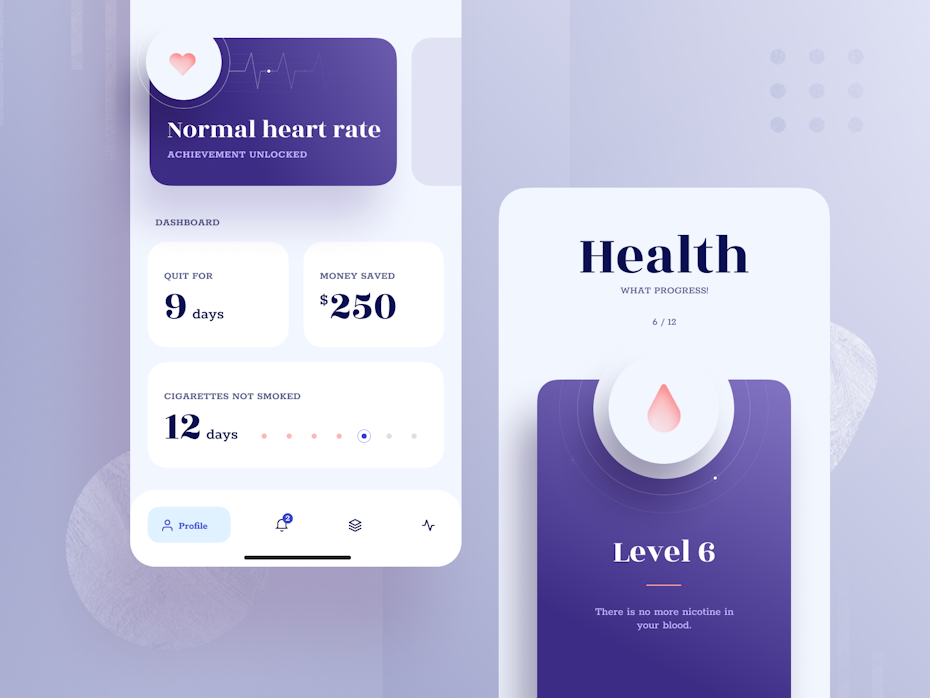
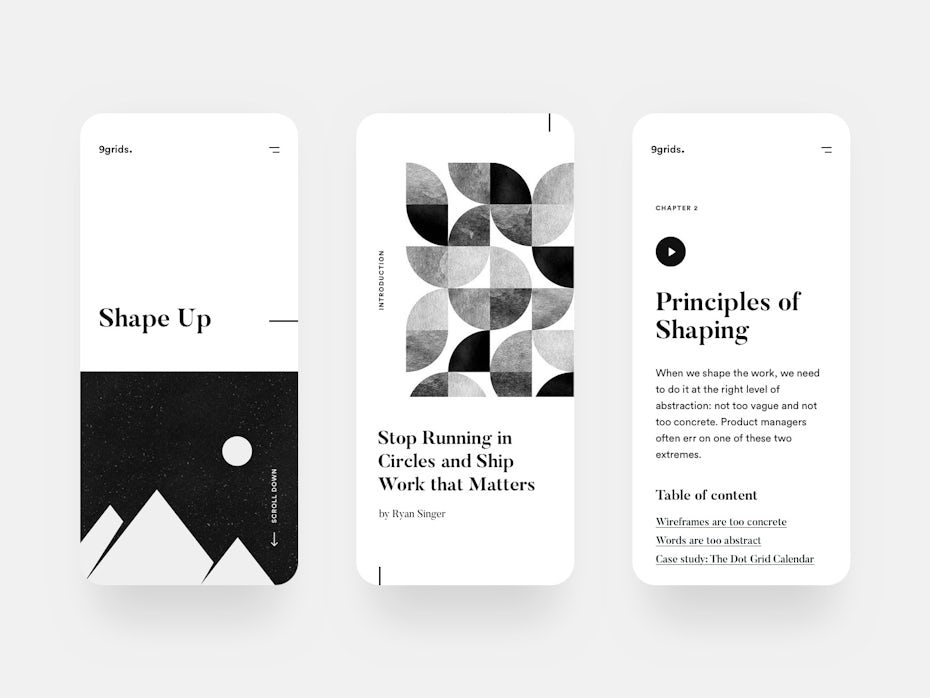
green and peach news analysis applight-colored music player appreading app showing serif fonts and images of authorspurple and white health app tracking a user’s journey to quitting smokinggardening app showing bright images of plants and human handsblack and white app with bold grayscale imagery

3. Futuristic color overload

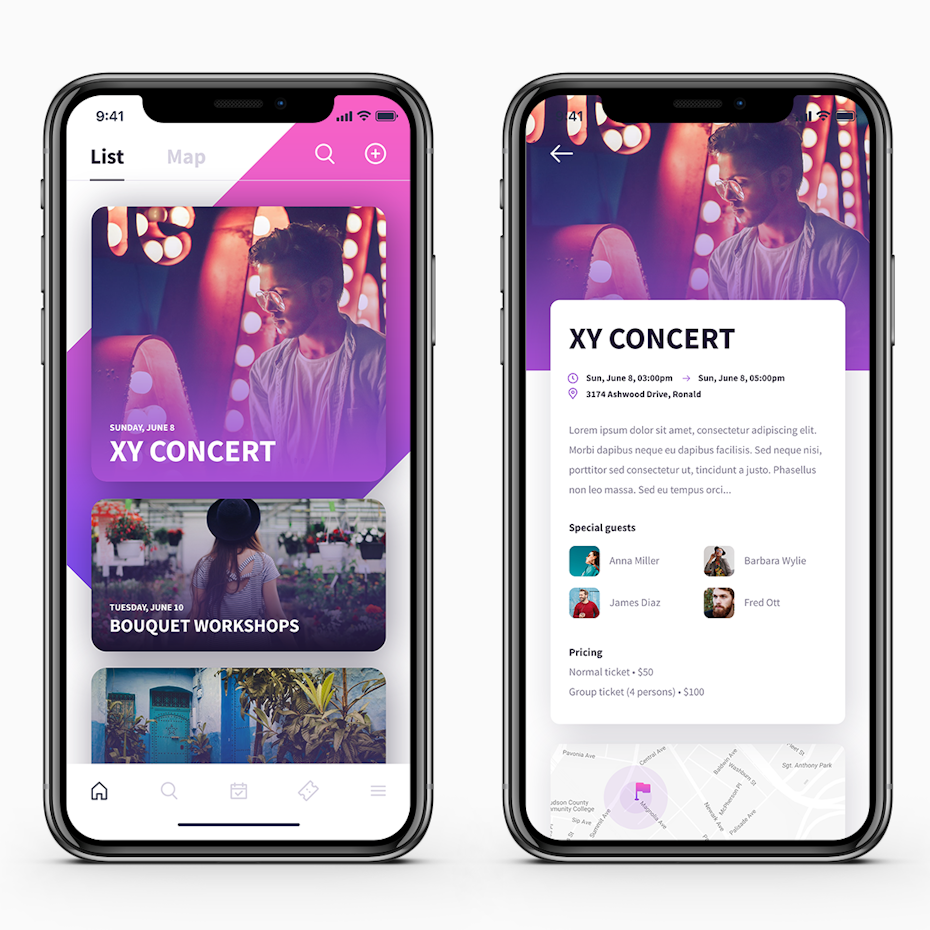
Another one of the top upcoming app branding trends for 2020 is maxed-out colors. And although app designers are working every color of the rainbow into their designs, a few in particular—purple, blue, pink and other neon colors—appear to be the stand-outs. Why? They’re the colors of the future. In contrast to browns and greens—earth tones—the purples, blue and pinks we’re seeing dominate app trends are colors that don’t appear in nature, colors that can only be made by a human designer. That, and they’re colors that really pop against dark backgrounds, giving them a glowy, even cyberpunk feel.

Beyond looking hip and techy with purple and blue, there’s another reason why designers are playing with color in bigger ways than they have before, and it’s tech-related, too: today’s phones can show bold, vibrant colors off to their full potential.

primarily purple meditation app with pink gradient session blocks
App design by designer Entrain

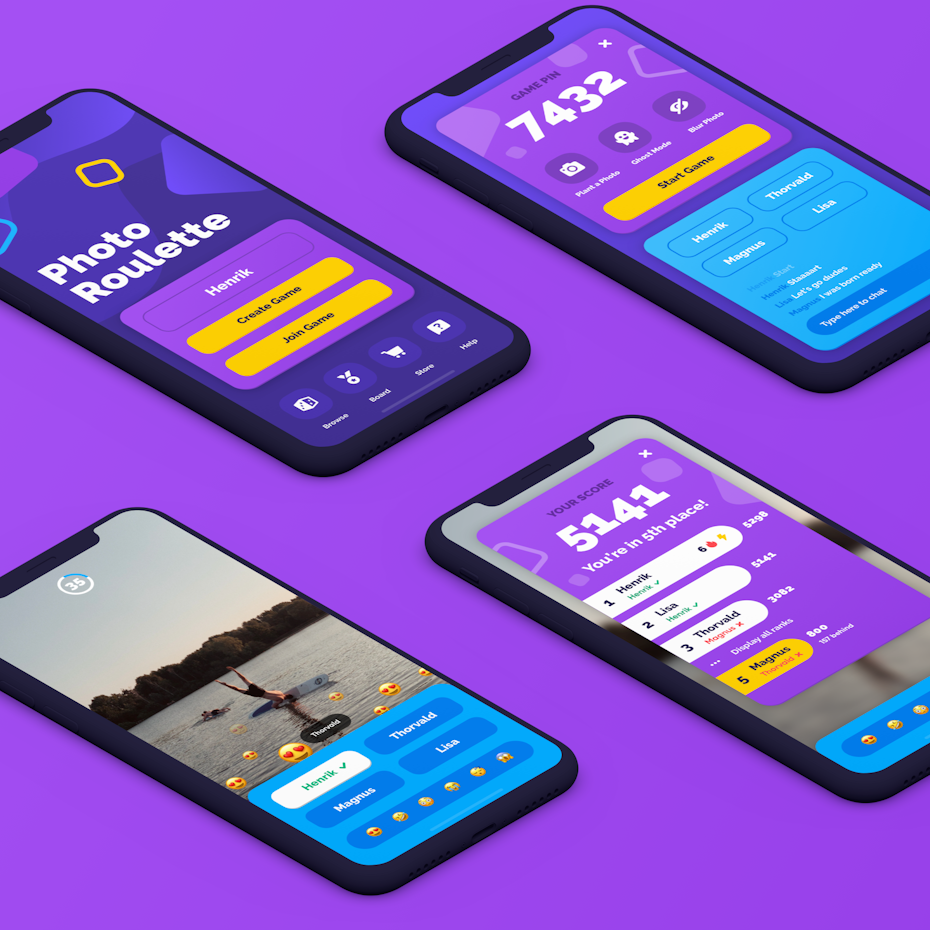
In their meditation app design, Entrain uses a bright, bold purple to frame the user’s personal log, then differentiates their different sessions and goals below with pink, purple and peach gradients. Bold purple and blue are the main colors again in Hazki’s photo game design, where a light blue box visually separates the chat from the rest of the game. Joharwn also uses a bright, almost neon blue as a secondary color in his design podcast app design, but goes in the opposite direction with his maximalist color palette: bright yellow, bold orange and punchy, bright backgrounds behind artists’ photos to make their faces pop against the dark background.

green-colored music player app
App design by Ekmel Can Gökdal. Via Behance
purple and blue photo gamecolorful music revenue app showing various dashboards and datacolorful banking app with a black background and rounded shapesboldly colorful podcast app interfacedark blue email appsoft purple currency app interface

4. Transparent elements

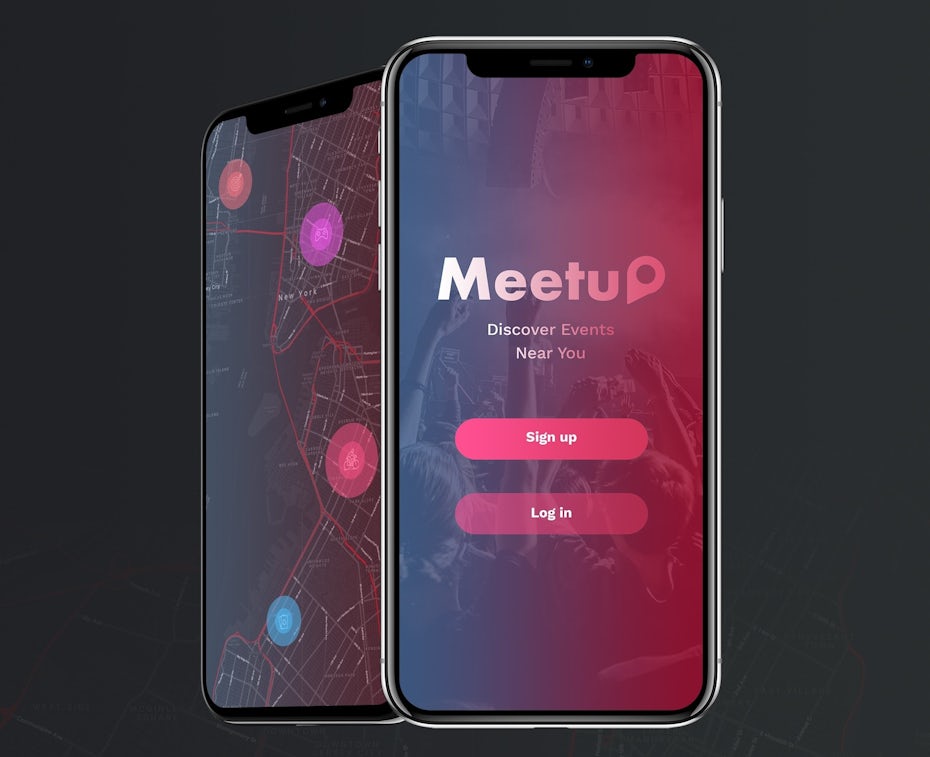
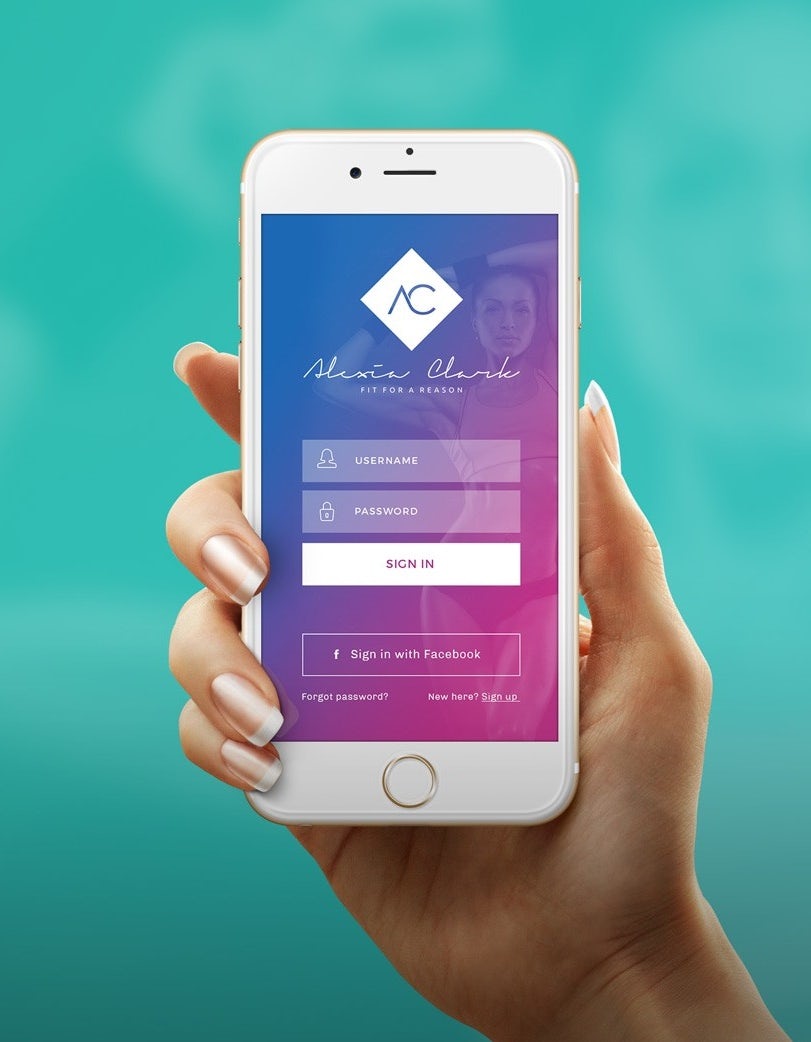
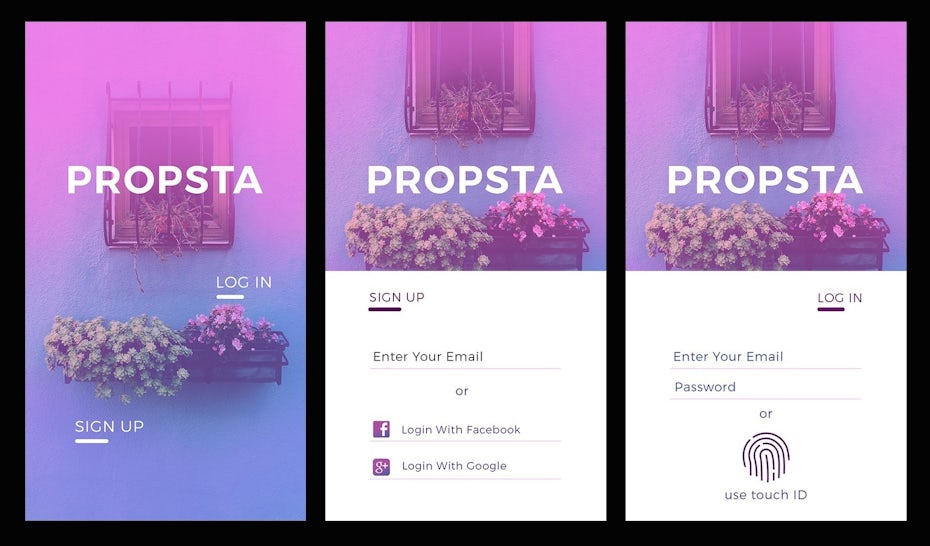
As we see in other up-and-coming design trends, gradients are still going strong in 2020. In the app world, what separates them from how we’ve seen them being used in the past few years is how designers are working with gradients. In 2020, gradients, overlays and color pops are all going to be transparent and semi-transparent on your screen.

When you can see through an image, it feels lightweight. It feels like you can reach right through and touch what’s behind it, and that’s exactly the sensation app designers are riffing on this year. BrioRom does it in his design for Meetup, where the transparent red overlay makes it possible to keep Meetup’s red branding while showing users exactly what the Meetup is all about: going places IRL and meeting up with people face to face.

collection of gray app screens with a red overlay
App design by designer BrioRom
purple and pink gradient app interface
App design by designer ozonestyle

By making certain design elements transparent, a designer makes it easy to fit a lot of information into a page without it seeming overwhelming or heavy. This is important because on a phone, you don’t have a ton of space to work with. In Elias craft’s workout app design, a transparent purple, green and gray gradient sets the app’s color palette while allowing the user to clearly see an image and text of whichever workout they’re currently doing. It creates a visible barrier between the text and the image, but a barrier that feels more like a sheer curtain than a solid wall.

multiple screens of a ticketing appworkout app using a transparent gradient laid over a photographpurple to pink gradient app designpurple and blue gradient
multiple screens of a home-viewing app
App design by designer GoneGirl

5. Rounded, organic shapes

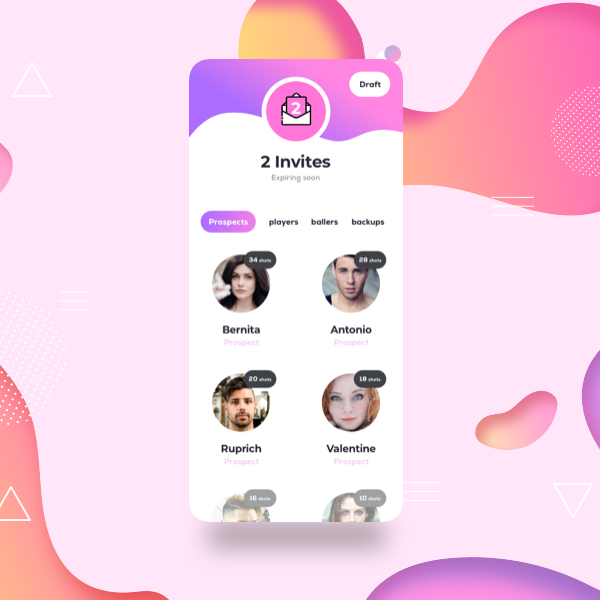
Rounded, organic shapes are another upcoming trend we’re seeing in places beyond app design. Like a lot of app design trends 2020 on this list, these imperfect, soft shapes are gaining traction because they make stereotypically cold, sterile tech environments easier to interact with. Finance is one area where round shapes in app design can be used to subvert uncomfortable expectations.
Instead of the dark blue and gray squares and rectangles we usually expect from finance apps, Oversight below uses imbalanced shapes in soft pink to illustrate where the user’s been spending money with a nightingale plot graph. Confronting where our money’s going isn’t usually comfortable… but with soft, organic, imperfect shapes, Oversight’s design takes all the fear and stress out of personal finance and makes it approachable, human and even fun.

white and pink finance app interface
App design by designer Oversight
largely purple voice-activated music appchat app design with round profile pictures and a wavy header
hot pink dating app interface with orange circles and white squiggles
App design by designer AleksandrCucu

6. Dark mode

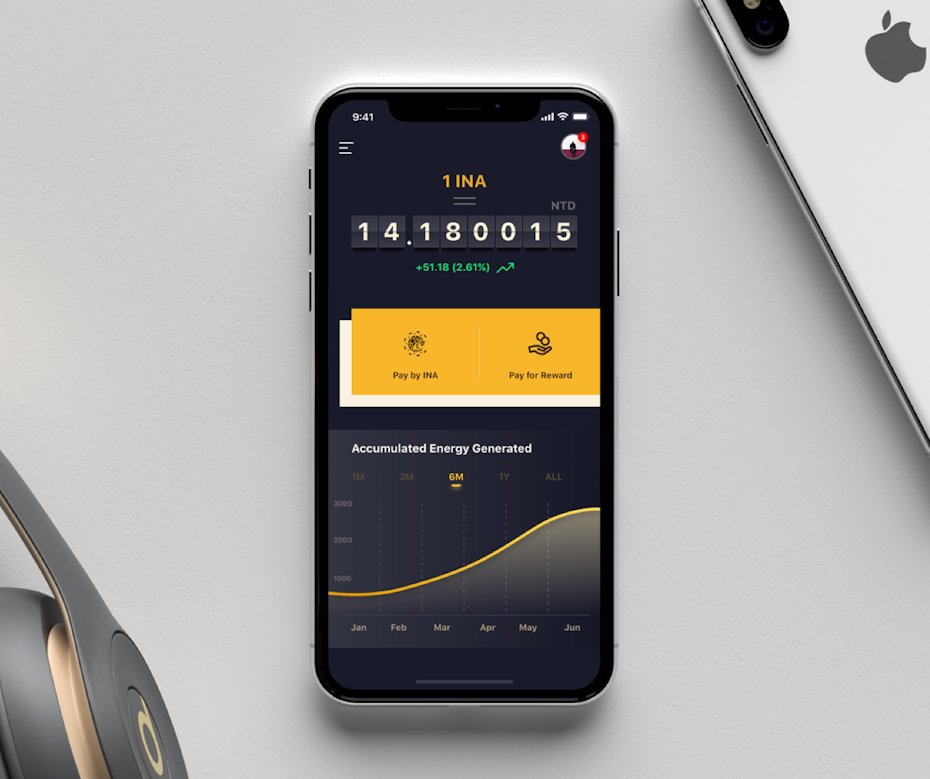
We spend between three and five hours a day looking at our phones and even though that can hurt our eyes and drain our batteries, our habits aren’t changing any time soon. In 2020, app designers are adapting to our phone habits and focusing on dark mode. In dark mode, light (but not stark white) text is contrasted against dark-colored backgrounds. Not only can viewing apps in dark mode protect your eyes from eye strain when you’re scrolling and texting in dim rooms, it’s less taxing on your phone’s battery.
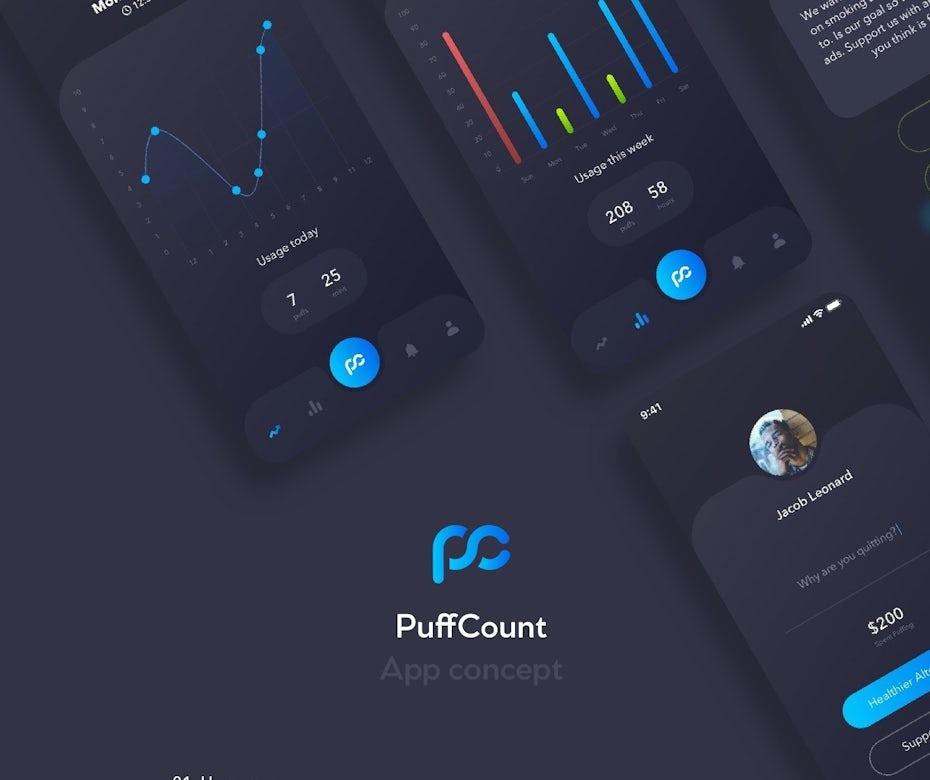
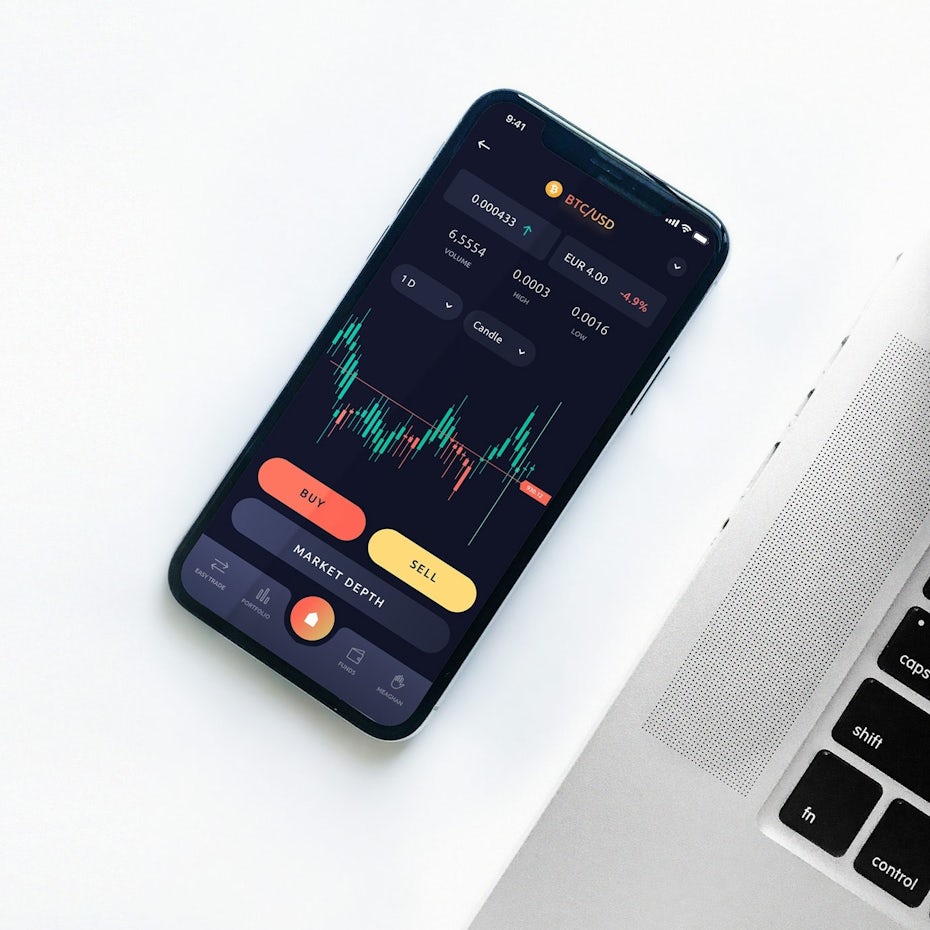
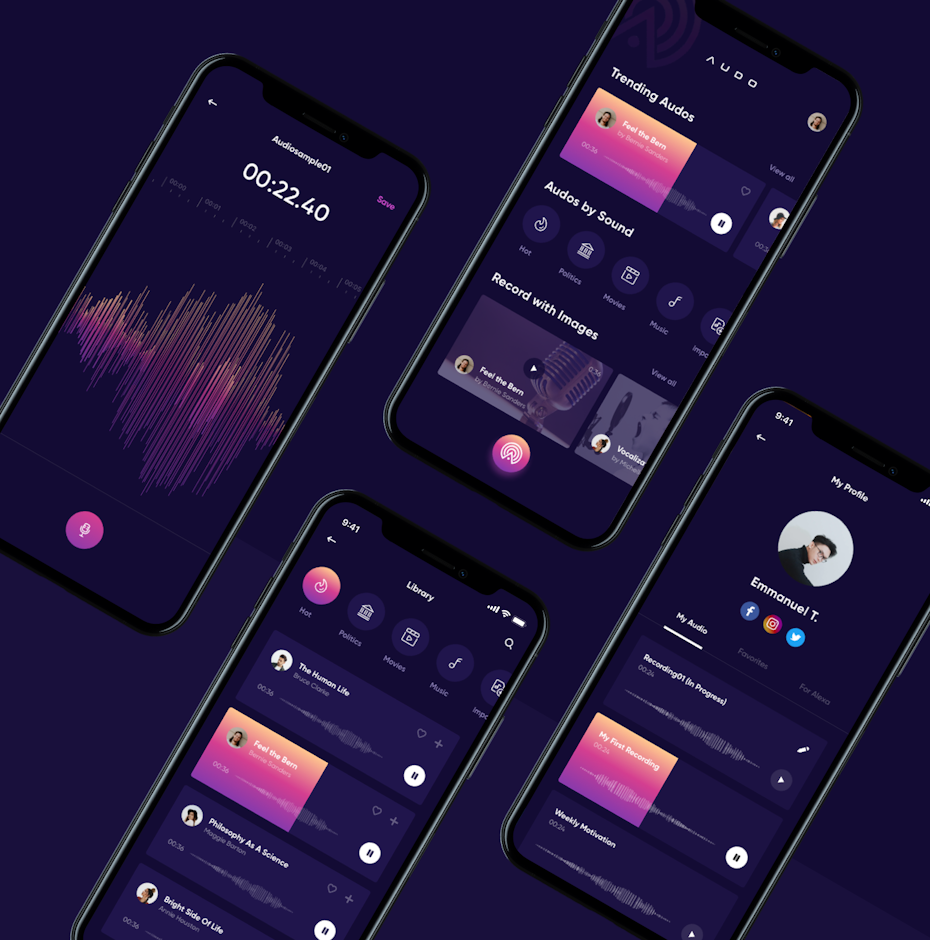
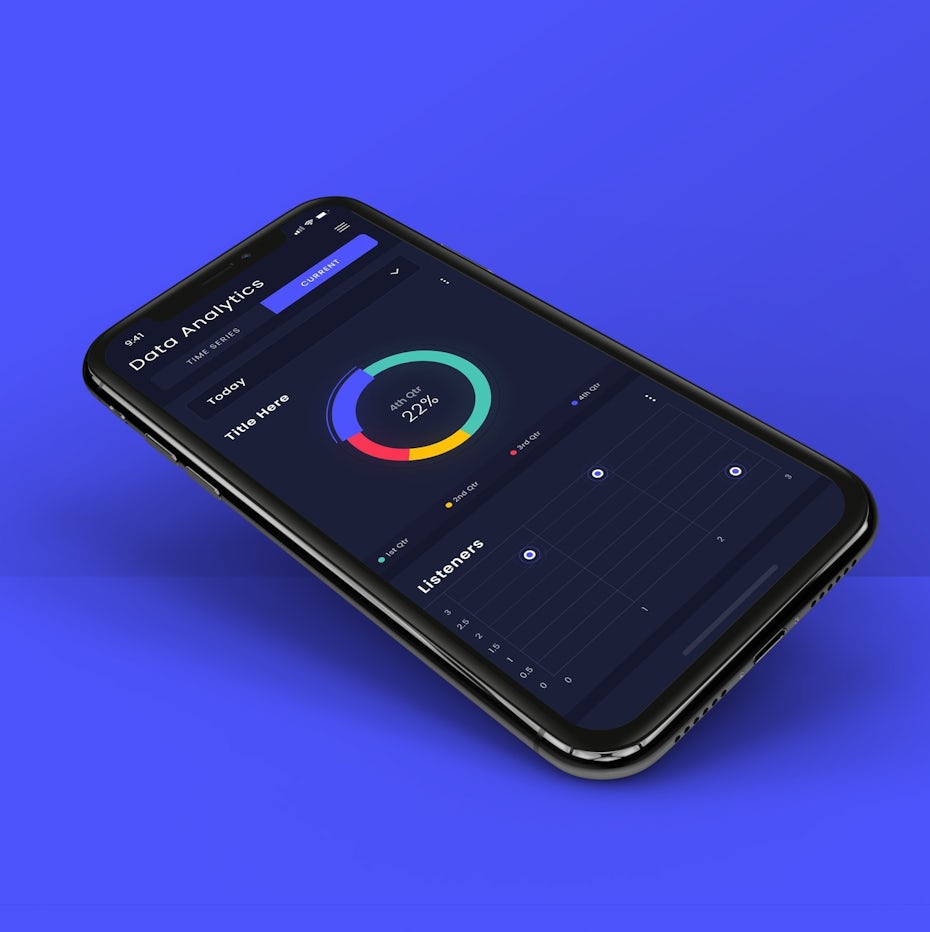
In 2020’s upcoming dark mode app designs, we’re seeing designers use neons and glowing gradients to make elements pop against dark backgrounds. A.D.S. uses bright colors in a really cool way in their music data analytics app, where each music genre is assigned its own color and the user can see which genres they listened to each day and at various points in the day.

dark purple music app screens
App design by designer Emmanuel®
dark interface of a finance appDark vape app design showing vaping stats in bluedark digital wallet app with orange lines showing balancesdark data analytics app using bright colors to show different stats
light and dark mode options for a workflow app
App design by designer Themesmile

7. 3D elements

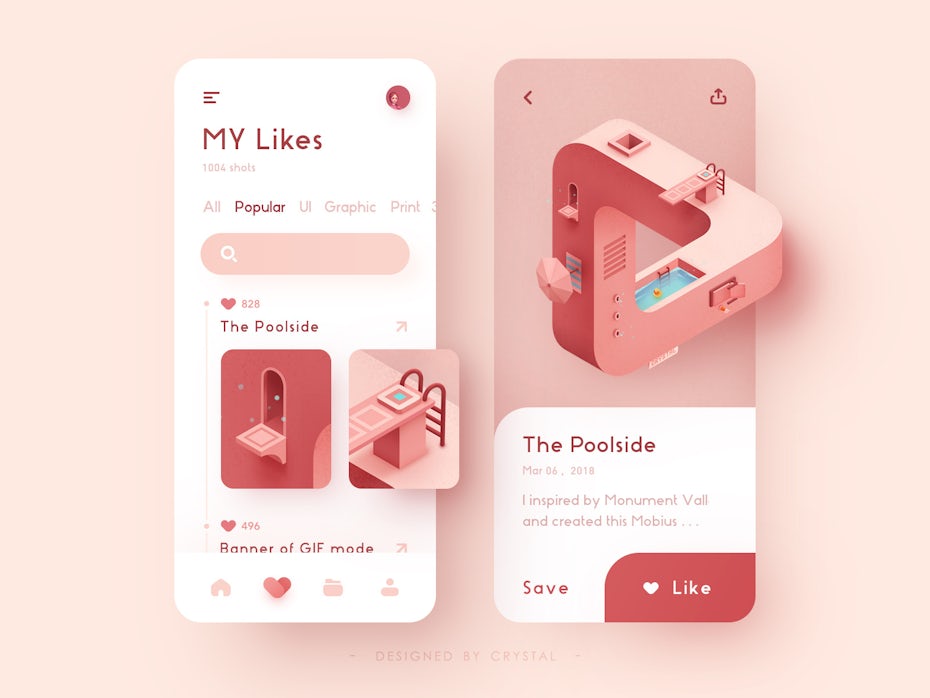
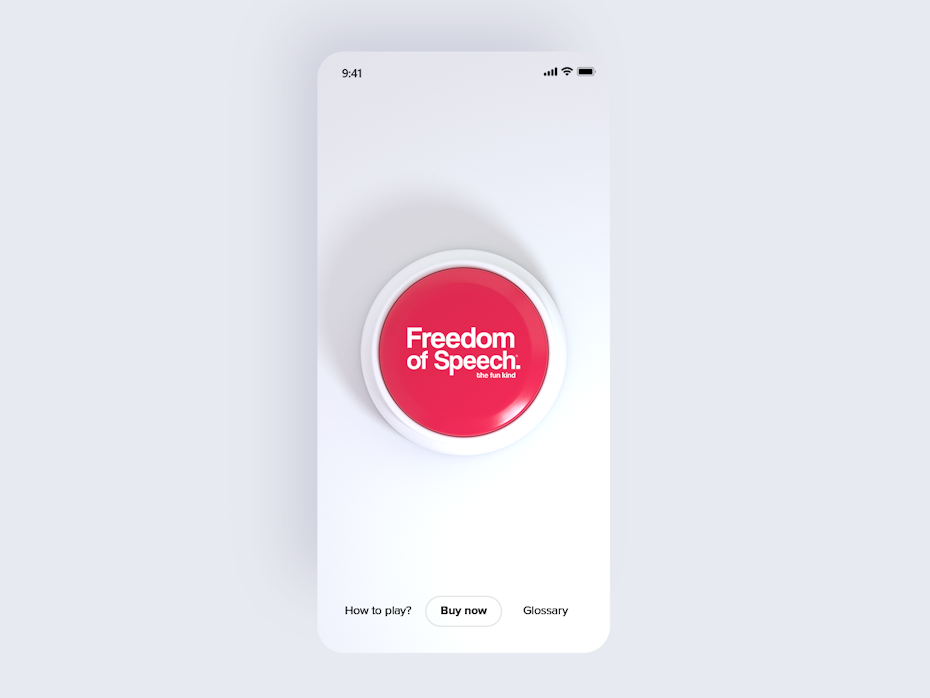
A few of the biggest branding trends for 2020 are focused on showing off what our latest phones can do, perhaps this one most of all. Designers are making 3D elements the focal points of their app designs, showing off the immersive worlds they can create through them. When a fully three-dimensional image renders perfectly on a flat phone screen, it turns the app into a physical space that the user feels they can step into.

The Glyph does this exceptionally well in their design for Soap Store, which features rotating 3D renderings of specific products the store carries. Looking at this app doesn’t feel much different from perusing a Lush store; the slowly rotating soaps are so realistic-looking that users might lift their phones and try to take a few sniffs.

pastel-toned soap retailer app showing 3D renderings of soaps
App design by The Glyph via Dribbble.
pink and white 3D depiction of a swimming poolround, three-dimensional pink button displaying the words “freedom of speech”
App design by 灰昼 NoirChen. Via Behance

8. Retro vibes

Another one of 2020’s up-and-coming app design trends is a trend we’re seeing (and loving!) in a bunch of other places: retro styling! Specifically, we mean designs that call back to video games and computer screens of the late 80s and early 90s with pixely text and blocky, simple graphics.

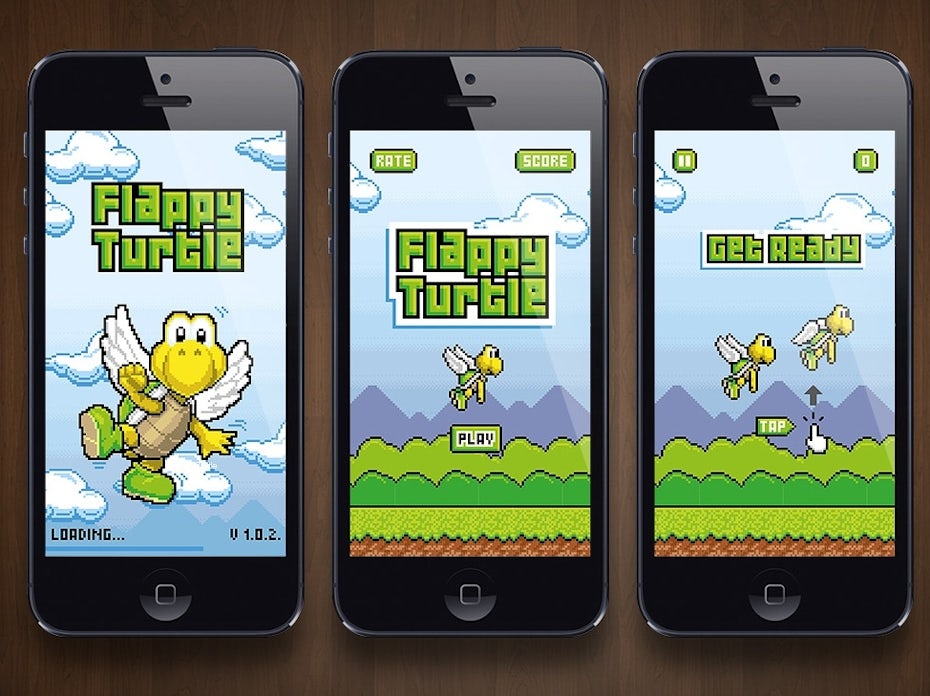
In some apps, like Jessica Alvaro’s design for screenity, the retro font is kept to one spot, drawing the user’s eye to the start button by contrasting it against more modern fonts in other places on the screen. It’s a similar strategy to using serif fonts to designate headlines vs. supporting text like we see in other app designs this year. Other designs don’t keep it contained—they go full retro, like Morzsamx’s design for Flappy Turtle that brings users right back to the 90s.

white, blue and red app interface with multiple fontspixelated game featuring a turtle with wings

Although a lot of the retro-inspired designs we’re seeing incorporate pixels and other screen-y elements, not all of them do. Some, like Olivia King’s Look Book app, also work in retro-inspired color schemes and illustrations.

app interface with differently colored backgrounds for different pagesyellow, white and black bird identification app

9. Personalization and customization

Another up-and-coming app trend that capitalizes on what technology is capable of is highly customizable apps. That’s because customization is what we want and what we’ve come to expect nowadays. We’re used to our apps getting to know us, like Spotify curating custom playlists and Facebook somehow knowing exactly what we talked to our friends about over brunch. In 2020, we know our apps can treat us like individuals. So app designers are giving us exactly what we want by creating designs that make it possible to personalize our experiences with them, ultimately giving us better experiences with the apps.

Manoj Bhadana’s quote generator app gives users the kind of motivation that works for them by giving them a bunch of different choices. These choices include font and the type of motivation the user responds to. This way, the generator doesn’t just dole out generic, one-size-fits-all motivation. It gives users the tools to generate quotes that speak directly to their unique souls.

custom options for quote generator app
App design by Manoj Bhadana. Via Behance

Customizable apps give us choices we didn’t have a few years ago. Now, a user can build their own personalized experience with an app, which makes them feel like they’re in the driver’s seat. This kind of design is ideal for apps that users hold close to themselves and want to interact with on their own terms.

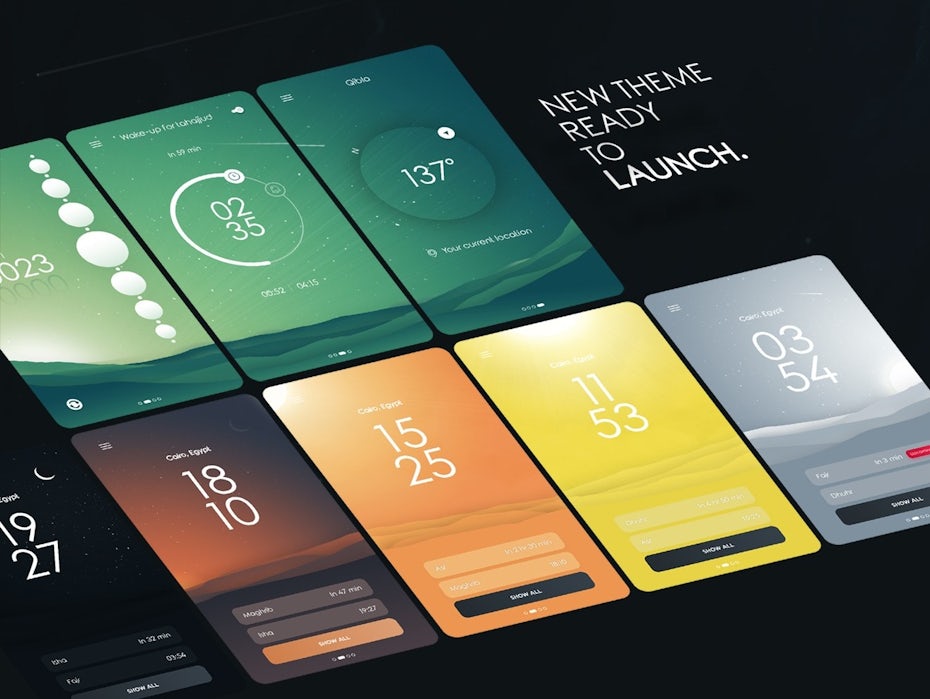
different color options for a prayer times app
App design by designer M.Tony
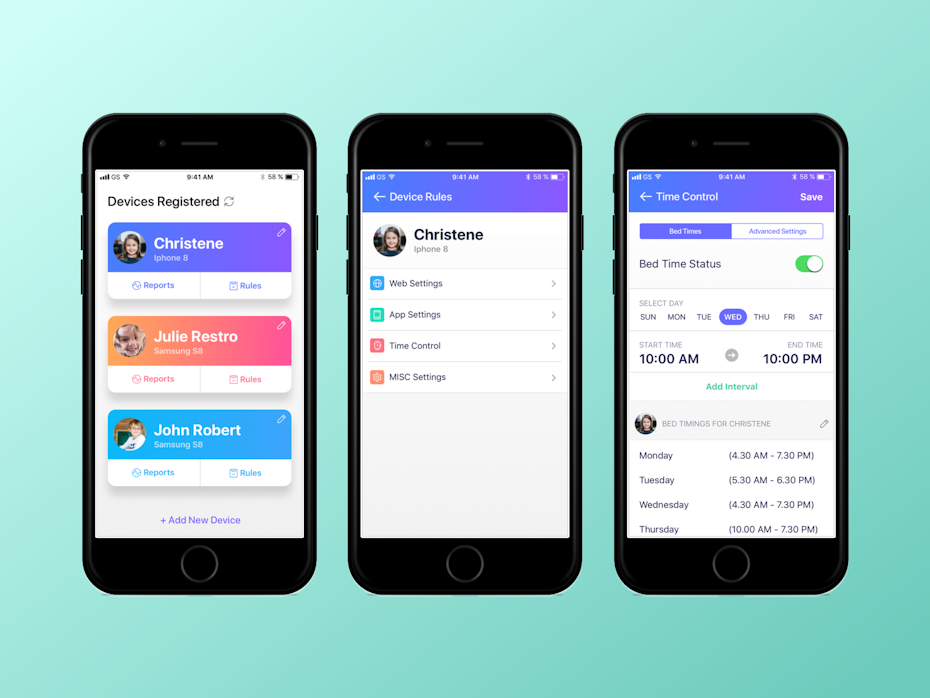
multiple screen color options for a movie appmultiple screens of a family scheduling app

Ready to see how designers are “app”lying these trends?

2020’s upcoming app trends are feel-good design. Dark mode feels good on our eyes when we’re reading late at night and nostalgic pixel art transports us back in time to when everything felt simpler, more fun and just good. These trends are only the beginning for how we’ll see app designers push boundaries and take old ideas in unexpected directions in the next decade, and we’re here for it!

Want a unique app design for your brand?
Work with our talented designers to make it happen.

The post 9 creative app design trends for 2020 appeared first on 99designs.